

Why Can’t They Just Do It The Right Way?
Why People Can’t Immigrate as Our Grandparents Did

A Century of Evolution in U.S. Immigration Law, Legal Precarity, and the Erosion of Due Process
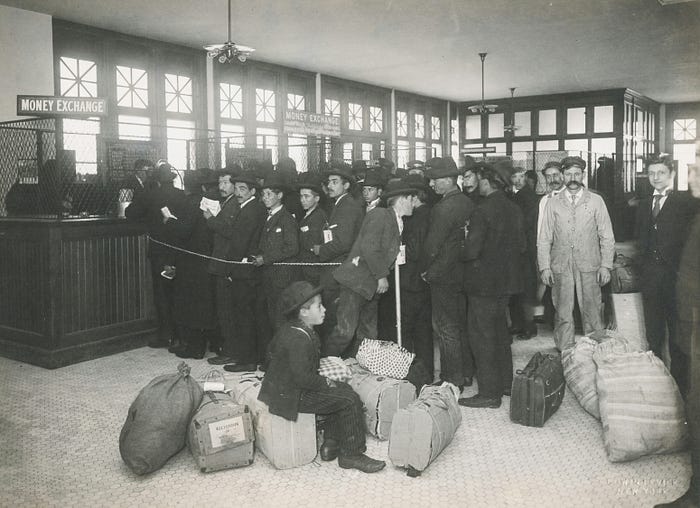
The contemporary discourse surrounding United States immigration policy is frequently characterized by a binary rhetoric: a welcoming embrace for those who follow the “legal” pathways, contrasted with enforcement measures directed solely at those who bypass established protocols. This framework suggests a continuity of the “American Dream”, that if one merely follows the rules, as previous generations did, admission and integration are assured. However, a rigorous, exhaustive analysis of the legal landscape from the early 20th century to the present day reveals a fundamental and exclusionary transformation that contradicts this simplistic narrative.
While the grandparents of the current generation, specifically Danish immigrants of the 1920s, navigated a system designed around explicit racial and national exclusion, the actual mechanisms of entry for eligible Europeans were procedurally streamlined, economically accessible, and protected by a robust assumption of permanence upon arrival. The “line” they stood in was short, the fees were nominal, and the bureaucracy was nascent.
The author used her own Danish grandparents as an example of immigration in the early 1900s.
In stark contrast, the legal immigration system of 2025 operates as a labyrinth of administrative exhaustion. For a modern European, the “line” has effectively ceased to exist, replaced by a complex web of lottery systems, high-net-worth sponsorship requirements, and multi-decade backlogs. More alarmingly, a distinct trend has solidified in the 21st century, accelerating through legislative and judicial decisions in 2024 and 2025: the systematic stripping of due process protections for those who are already lawfully present.
Through mechanisms such as the aggressive issuance of “Notices to Appear” (NTAs) following minor administrative denials, the use of “prudential visa revocation” by the Department of State based on arrest records rather than convictions, and the Supreme Court’s 2025 ruling in Bouarfa v. Mayorkas which stripped federal courts of jurisdiction to review discretionary agency revocations, legal immigrants are increasingly finding themselves in a zone of legal precarity. In this zone, status can be rescinded by bureaucratic fiat, with little recourse to an independent judiciary.
This report provides an exhaustive analysis of this century-long shift. It contrasts the Danish immigrant experience under the National Origins Formula with the insurmountable hurdles facing modern applicants. It documents the weaponization of the immigration bureaucracy, in which agencies like USCIS have shifted from adjudicators of benefits to enforcement gatekeepers. Finally, it details the erosion of the “rule of law” within the immigration system, where administrative efficiency has superseded constitutional due process, leaving even the most compliant immigrants vulnerable to sudden, contest-proof removal.
