


THE HUMAN RESIDUE: WRITING CHALLENGE
Nobody marks the day a machine takes a chore for good
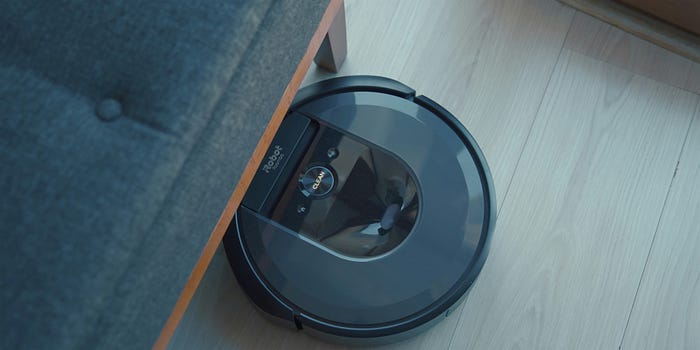
Ninety percent of the time, the carpets in my home are vacuumed by an artificial intelligence. I didn’t decide that. It happened one Christmas at a time, in wrapping paper, and nobody sent a memo.
When I posted the first writing challenge at The Human Residue, I asked you to find the date stamp: the last time you did a piece of work entirely yourself. I’d already found mine, a project document from January 2024 buried in an old email, after 26 combined years of building those documents at SAP and Sanford Health. I figured any second entry of my own would come from the same working life. I manage a friend’s business network on the side, and the Meraki dashboard now flags trouble with alerts a machine-learning model helps raise, before I’ve opened a single log. The old way was combing syslog archives for needles in haystacks. I assumed that was my story: the needle-hunting I quit doing.
But the machine that actually got me isn’t in anyone’s server room. It’s under my couch, and there are three of them.
The fleet
A Roomba Max 705 Vac patrols the basement. Its twin runs the second floor. The main floor belongs to a Max 705 Combo, the one that mops behind itself and then washes its own mop. I own two regular vacuum cleaners, too. They live in the closet, and yes, I know exactly how that sounds. I spent decades in a closet myself. I can report the Bissell is handling it better than I did.
We’ve owned some version of Roomba for years, and I always assumed they ran on simple computer logic: trace the walls, then cover the square footage in between. For about two decades, I’d have been close to right. The first Roomba shipped in 2002, and its descendants cleaned by what IEEE Spectrum’s Evan Ackerman called a sensor-driven pseudorandom bounce, crossing your floor an average of three times from different angles. Dumb and thorough. A wind-up toy with a dustbin.
Then the machines got eyes. In September 2015, the Roomba 980 put a camera on top and started building a map of the house; the first time iRobot’s vSLAM navigation left its enterprise robots and entered a consumer product. In September 2021, the Roomba j7 added machine learning that identifies cords and pet waste. When something confuses it, it takes a photograph and sends the picture to your phone to ask what it should do next time. iRobot was so sure of the model that it “guaranteed to detect and maneuver around” your dog’s accidents. We’re a long way past wall-tracing here. The vacuum files incident reports.
And in March 2025, the company bet the house on it, with what its CEO called “the largest product launch in iRobot’s history”: a lineup rebuilt around LiDAR mapping and vision AI. My 705s came out of that wave, the Vac in April at $899.99 and the Combo in July. The press release says the Combo “immediately recognizes toys, cords, pet waste, and intelligently navigates around them.” Mine has photographed a sock and asked me about it. I answered. That’s the part I’d tell my 1998 self about. The robot wouldn’t be the surprise. The correspondence would.
About Skynet
So when did iRobot quit rote logic and start infusing my little housekeepers with Skynet? That was my actual research question, half a joke, on a Friday night, with the app open. The honest answer is that the learning arrived in 2021 and the full mapping brain in 2025, which means the fleet that arrived for Christmas is the smartest thing in my house that isn’t a person.
Here’s what I found instead of Skynet. On December 14, 2025, days before those boxes reached my living room, iRobot filed for Chapter 11 bankruptcy. On January 23, 2026, a Chinese contract manufacturer named Picea took 100% of the company. Two weeks before the sale closed, two members of Congress asked the Treasury to review it, on the grounds that Roombas hold detailed interior maps of millions of American homes and the buyer has ties to the Chinese government. This is the same company Amazon tried to buy for $1.7 billion, a deal that died in January 2024 amid European regulatory objections and widespread public concern about what Amazon might do with the maps.
My housekeepers aren’t going to wake up one night and strangle us with a HEPA hose. The scary question turned out to be duller and older than the movie. Forget what the robot thinks. Who holds the deed to what it knows? The map of my house has now outlived its maker’s stock ticker, and my robots cleaned right through the bankruptcy without missing a scheduled run.
The date stamp I can’t find
Here’s where my own challenge caught me. My last hand-built project document had a file date. Vacuuming leaves no file. There’s no folder to scroll. The robots’ app keeps a job-by-job history of their runs, down to the minutes spent and the square feet covered; my own last run of an upright vacuum across my own living room is the one job in this house nobody recorded. I’ve narrowed it to a Christmas, one of two or three of them, when the newest robot took the last floor I still did by hand. I can’t get closer than that. The date exists. It just belongs to no one.
And I have to be honest about the ledger, the way I asked you to be. Mostly, what I feel is relief. I never loved vacuuming. Nobody grieves a chore the way they grieve a trade, and I won’t pretend the hum of a machine doing my least-loved job wounds me. But there’s a smaller, stranger entry in the other column: three robots in my house keep exact records of work I did for forty-some years without keeping any, and their bookkeeping makes my old, unrecorded labor look like it never happened. Four decades of Saturday mornings. In my parents’ home, in my college dorm room, in my first apartment, in the two homes I owned before this one, and now. Zero receipts.
House rule, applied to the house’s editor: I used Anthropic’s Claude to find and verify the dated facts in this piece, the product announcements, the court dates, and the letter from Congress. Every argument and every line of prose is mine.
The two vacuums are still in the closet, or closets, as is the actual case. I opened one of them last night and looked at the lonely vacuum cleaner the way you’d look at a landline: not useless, just unasked. One of these Saturdays, I might haul one out and run it over a floor a robot already finished, for no reason other than nostalgia.
It wouldn’t be work. It would be a visit.
If you want more essays like this and the ones this challenge brings in, follow The Human Residue or subscribe to the publication’s newsletter.
Grace Ann Hansen is an independent researcher and writer, and an MBA & PhD graduate student in health informatics and artificial intelligence. She is also a published author, professional musician, gymnastics coach, and queer transgender woman living in Sioux Falls, South Dakota. All interpretation, argument, and prose are her own. Correspondence concerning this article should be addressed to Grace Ann Hansen at grace@graceannhansen.com.
Written for The Human Residue: Writing Challenge: The Last Time You Did It Yourself