

The Pond They Have to Keep Defending
On winning a fight that never seems to end Continue reading on An Injustice!

On winning a fight that never seems to end
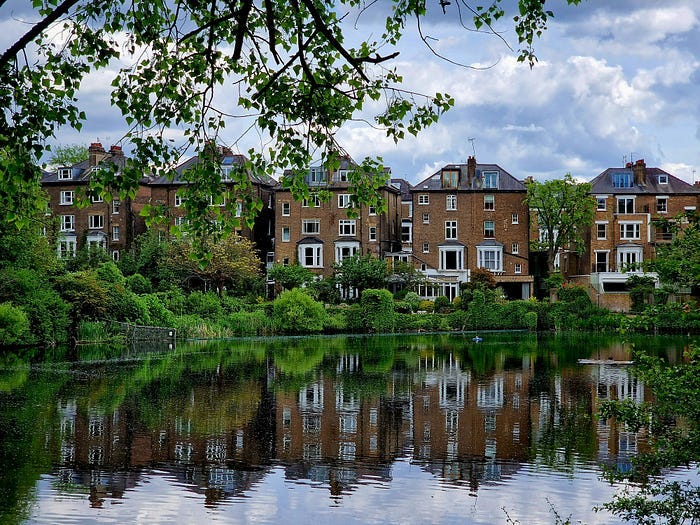
A trans woman in north London wants to swim in a pond. The machinery now attached to that wish includes a public consultation with tens of thousands of responses, a Supreme Court judgment, a draft code of practice running to over 300 pages, and a court date this autumn. None of that is about the pond.
The gap between those two things is the whole story. The act is small. A person changes in a hut, walks down to the water, and gets in. The structure built around the act is enormous and keeps getting bigger, and the people it is built around are tired in a way that gets misread as weakness, when it is closer to the fatigue of a second job nobody applied for.
What the vote actually did
On 4 June 2026, the City of London Corporation agreed a future access policy keeping the Kenwood Ladies’ Pond and the Highgate Men’s Pond trans-inclusive (City of London Corporation, 2026). Trans women keep their place at the ladies’ pond, trans men at the men’s, and the mixed pond stays open to everyone. The Kenwood Ladies’ Pond is the only women-only wild-swimming spot in the country (City AM, 2024). It opened to the public in the mid-1920s (Guildhall Historical Association, 2016) and has been fought over by the women who swim there for nearly as long, most recently in 2024, when the pond’s own association voted down a motion to bar trans women (PinkNews, 2024).
The vote followed a two-month consultation that ran from late September to late November 2025 and drew more than 38,000 responses, with 86 percent supporting the arrangement already in place (City of London Corporation, 2025). The Corporation’s policy chairman was careful to say the consultation “was never a referendum,” then treated a five-to-one result as the clear instruction it plainly was, the same decision funded upgrades to changing rooms, showers, and toilets, with more private cubicles. Reporting put the package at up to £1.08 million, with final funding due before members in July 2026; the Corporation’s own announcement gave no figure.
So far, this reads like a win, and it is one. A community was asked, the community answered, and the answer held.
The part that did not make the bulletins
Here is the part that did not lead the morning coverage. In March 2026, the Court of Appeal granted the gender-critical group Sex Matters permission to bring a judicial review of the ponds policy, and the substantive hearing is expected this autumn (Local Government Lawyer, 2026). An earlier challenge had already been refused. This is the second pass at the same target.
Take the arithmetic in for a moment, then keep going. The Corporation will now spend public money defending, in open court, a policy that 86 percent of the people it consulted already endorsed. The Trans+ Solidarity Alliance described the position bluntly: an inclusive choice being made to defend itself against what the group called “well-funded lawfare,” with the cost falling on the public purse until the government clarifies its own equality law (PinkNews, 2026). The vote did not end the fight. It scheduled the next round.
It is fair to raise the obvious objection so that I will raise it myself. Critics argue that the 86 percent is soft, that an open consultation invites flooding and tilts away from the regular swimmers it should reflect. The Corporation openly conceded the risk rather than hiding it. It tested the headline number against independent focus groups of regular pond users, who reached the same conclusion (City of London Corporation, 2025). Grant the objection its full weight anyway. The honest answer to a consultation you believe was skewed is a better consultation, or a heavier weighting of the people who actually swim there. The answer on offer is a lawsuit. You do not sue a survey for being unrepresentative. You sue it for returning a result you cannot live with.
One pond, wired into everything
None of this happens in a vacuum. In April 2025, the UK Supreme Court ruled in For Women Scotland Ltd v The Scottish Ministers that the words “woman” and “sex” in the Equality Act 2010 refer to biological sex (UKSC, 2025). The Court was at pains to say the judgment should not be read as the triumph of one group over another, and that trans people keep their protection under the characteristic of gender reassignment. That nuance survived about as long as it took to act on the ruling. Within roughly a week, the equality regulator issued interim guidance on single-sex toilets, washing facilities, and changing rooms (Stonewall, 2025). By May 2026, a draft statutory code of more than three hundred pages had been laid before Parliament.
Consider what a single swimming pond is now wired into:
• a national consultation with tens of thousands of responses,
• a Supreme Court judgment redefining a word,
• a regulator’s interim guidance,
• a three-hundred-page draft code,
• a refused legal challenge,
• a granted judicial review, and
• a hearing not yet held.
A pond. To settle who may swim in it.
This is where the difference between a regulatory question and a banishment question matters, since the two get dressed in the same clothes. A regulatory question has an answer that can be moved by evidence: what hormone threshold, what waiting period, what facility design. A banishment question has only one acceptable answer, and it reverse-engineers whatever process is needed to reach it. When a policy backed five-to-one in consultation still has to run a gauntlet of appeals, the tell is that the process is not searching for the right answer. It already has the answer it wants, and it is willing to litigate until it gets it.
Notice, too, what “inclusive” has been narrowed to mean on the ground. The Corporation has said staff will not check identification or carry out physical assessments, and will rely on judgment and discretion at the water’s edge (PinkNews, 2026). That is humane, and it is the catch. A right that rests on a lifeguard’s discretion, renewed each season and contested in court each year, is not quite a right. It is a permission, and permissions get withdrawn. Living within a permission, never certain which season it will be revoked, is a tax in itself, paid daily in low-grade vigilance by people who only wanted to swim.
Attrition wearing the mask of process
This is the part that sounds like paranoia when trans people describe it, so let me describe it as plainly as I can. The point of a campaign like this is not any single ruling. The point is the calendar.
Another consultation opens. Another code goes out for comment. Another hearing gets a date. Another sign goes up at another pond, another bathroom, another changing room, spelling out who counts and who has to explain themselves at the door. You do not have to win every case to wear down a population. You only have to keep the cases coming, so that defending an afternoon swim becomes a standing obligation, renewed every season, with no version of the future in which it is simply over.
That is the strategy, and it works precisely by not looking like one. It looks like diligence. It looks like consultation, judicial review, and statutory codes, which are the ordinary furniture of a law-governed country. Turned on a single group and kept running indefinitely, that same furniture becomes a method of exhaustion. Attrition wears the mask of process.
Why this is personal, and why that is the point
I should say where I stand. I am not a neutral party. I am a transgender woman. I am, plainly, a woman too, and I have spent years being told those are the same sentence or opposite ones, depending on who needs me to be a threat that week. I live in South Dakota, about as far from a Hampstead bathing pond as a person can get and still be on a map. It does not matter. The grid is transatlantic. The sign at the ladies’ pond in London and the executive order back home that set the word “extremism” next to my identity in its own title are the same instrument, tuned to the same note (Executive Order 14168, 2025).
I came out at fifty-three. I am sixty now. What that sentence skips is the autumn of 2019, when I pointed my car at three grain trucks on a South Dakota highway, and the only thing that stopped me was the driver I would have taken with me. I started hormones nine days later. They did not fix my marriage or my finances. They quieted the noise enough that I could hear myself think for the first time in five decades. People who come that close to not being here, and then make it, do not have much patience left for being told to prove they belong in the water, season after season, by people who will never have to.
I did not enlist for any of this. Like most trans people I know, I would take a quiet life in a heartbeat: coffee strong enough to matter, a band that still books the occasional gig, a stack of books I keep meaning to finish. What I got instead was a standing invitation to argue for my own ordinariness, on cable panels, in legislative hearings, and in the comment threads under articles like this one. The weariness people hear in trans voices is not fragility, and it is not a debating posture. It is the specific fatigue of anyone asked to re-prove a settled thing, on someone else’s schedule, with no end date offered and none intended.
The ponds stayed open. That matters, and it deserves to be said without hedging: a community was asked, it answered clearly, and the water is still there for everyone it was there for last week. The lawyers will be back in the autumn. The swimmers will be back tomorrow. A pond is just a pond, until your right to get into it becomes the thing worth a decade of court dates. Then it is everything. So you swim anyway.
Grace Ann Hansen is an independent researcher and writer, and an MBA & PhD graduate student in health informatics and artificial intelligence. She is also a published author, a professional musician, a gymnastics coach, and a queer transgender woman living in Sioux Falls, South Dakota. All interpretation, argument, and prose are her own. Correspondence concerning this article should be addressed to Grace Ann Hansen at grace@graceannhansen.com.