


THE HUMAN RESIDUE: WRITING CHALLENGE
A writing challenge about the moment nobody marks
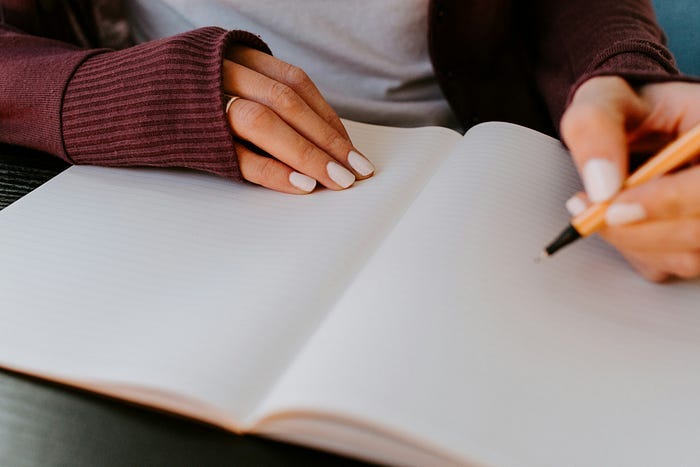
Somewhere on your computer there’s a file you haven’t opened in years, and its date stamp is quietly one of the more important dates in your working life. It marks the last time you did a piece of work entirely yourself. The last cover letter you wrote alone at a kitchen table, the last set of meeting notes you typed from your own scrawl, swearing at your own handwriting. You didn’t know it was the last one. None of us ever do.
And let’s not be coy about who took it over. Your spouse didn’t start drafting your meeting notes. You didn’t hire an assistant. Nobody promoted you and handed the grunt work to your minions. An AI took it, quietly, one task at a time, and it never sent a memo announcing the change.
I found this out in an embarrassing way. I spent a combined twenty-six years at SAP and Sanford Health writing the documents that hold big projects together: migration plans and methodologies and status reports, thousands of pages of them, and these days I watch a model draft the bones of one before my coffee’s cool enough to drink. One night, I got curious about when the handoff happened. So, I went scrolling through my old folders, looking for the last project document I built completely by hand, no machine anywhere in the room. I found it in January of 2024. It actually only exists as an attachment to an old email, sitting under that lonely date I scrolled right past about five times before I realized what it was. On the day that email was written, I wasn’t paying attention. I was just working.
That’s the moment this publication exists for: the one that ends quietly, without a witness. So for our first writing challenge, I’d like you to be the witness.
What I’m hoping you’ll write
Write about the last time you did it yourself from scratch, no AI-built templates, no Grammarly to check your punctuation. Nothing but you and your blank mind trying to create something that makes you look smart in the standup meeting you were running an hour from then.
Pick one piece of work an AI now does for you, or near you, or instead of you, and take me back to the last time it was all yours. Put me at the desk. Give me the hour, what the work asked of you that day, and what you were like when you did it, whether you grumbled through it or secretly loved it. Those small details are the whole essay.
And if you can’t find your last time, write about the day you realized it had already slipped past. That moment has a date too, and it’s just as much yours.
If work documents were never your thing, did you ever quit opening the recipe box and start asking Gemini how long the potatoes have to bake at 400 degrees before you put the chicken breasts in?
A few things worth knowing before you start
This is a first-person publication, so the piece needs to have happened to you, or to someone you sat across from and can name. One real moment will carry an essay further than any sweeping argument about where AI is headed; I promise you the small, dated thing is the interesting thing. Name the work plainly, whatever it is. Chord charts, lesson plans, radiology reads, wedding toasts, code reviews, oven-baked sheet-pan dinners. The stranger and more particular, the better I like it.
Be honest about what’s left. Maybe something stayed yours; maybe nothing did. Relief is welcome here, and so is grief; most of these essays will live in the place where the two overlap. The only endings I’ll send back are the tidy ones, the pieces that wrap the loss in a bow or declare us all doomed. Real is the bar.
And the house rule, the one the publication is named for: the writing has to be yours. If AI helped anywhere along the way, just say so in the piece, in plain words, what you used and what for. Quoting a model is fine when you name it. I hold myself to the same rule, so here’s my line for this post: I used Anthropic’s Claude to find and double-check the one factual claim below, the bit about Medium’s Partner Program and the paywall. Everything else here, argument and prose alike, is mine. Yours has to be yours. That’s the whole game.
The details
Aim for 600 to 2,000 words, and don’t pad; a short, true story from your corner of the working or living world fits our publication beautifully. Entries close on September 30, 2026.
To enter:
Follow The Human Residue.
Write your piece, and when you’re ready, open your draft’s three-dot menu and choose Submit to publication. Click the Following tab, and you’ll find The Human Residue in your list. Go ahead and submit it.
As long as it’s good enough to print, even with a little help from me, I’ll add you to our regular list of writers.
One heads-up so the submit button doesn’t stop you cold: Medium checks a few boxes on our behalf before it lets a story through. Yours will need a subtitle, a preview image, at least one topic it shares with the publication (Artificial Intelligence or Psychology will do), and the paywall turned on. That last one means being enrolled in Medium’s Partner Program, which is also what lets your piece earn; stories pay out only from behind the paywall.
I’ll read every entry myself. I’ll most likely publish every one of them. The strongest ones get featured in the publication and the newsletter, and when the window closes, I’ll publish a newsletter roundup linking my favorites.
I’ll be writing mine right alongside you. I already know my date. It seems only fair.
So tonight, or whenever the question starts itching, open the old folder. Read the date stamps. Somewhere in that list is a day you didn’t know was an ending, and I’d love to hear what happened on it.
If you want these essays and the ones this challenge brings in, follow The Human Residue or subscribe to our newsletter.
Grace Ann Hansen is an independent researcher and writer, and an MBA & PhD graduate student in health informatics and artificial intelligence. She is also a published author, professional musician, gymnastics coach, and queer transgender woman living in Sioux Falls, South Dakota. All interpretation, argument, and prose are her own. Correspondence concerning this article should be addressed to Grace Ann Hansen at grace@graceannhansen.com.
I would really love to see some folks who have read and commented on my other AI-related articles step up for this challenge! And a few of my favorite editors also!
Wendy Roome, William Marut, EclecticMusicLover, Curt Welch, Andrew Pilkington, P Kawake, Misschameleon, Mehki, Paul Carroll, Cam Cairns
Dr. K, veganelder, Ian J Maher, Laura Marland, Wrangler, E Schwartzreich, marychipman, Fay Wylde, Kat Wexford, John Turley
John Wylder, Lannie Rose, Bisselk, Edwin Hurwitz, Powerupmn, Michael From Mountains, TStock, Mark Carpenter, Jo C Leightner-www.jogriefrecovery.com, Rex Kerr
Norman Prather, VolkColopatrion, Don Baker, The Case for Kindness by Lisa Gibson, Kennet Benoit-Hutchins, Erik Engheim, Mike Skokin, Michael McKinney, John Glavin, Robert Leonard
Alexander Knapp, Dan Holden, Gabriel, Andrewharris, Blue America, Chris Phoenix, Jamie Aileen, Muskan Purohit, Cuurious caat, John Hansen PAL
Max Dancona + 23 others, Gregg Bender, Rachel Addison, Ravyn, Vincent Paterno, Manmeet Singh Bhatia, Dr. Leo Croft, Philip S. Naudus, Lynn Loffelmacher,