

The Ban They Didn’t Order
The Supreme Court just told states they may bar transgender girls from girls’ sports.

Supreme Court
The Supreme Court just told states they may bar transgender girls from girls’ sports. It never told them they must. That gap is where the fight lives now.
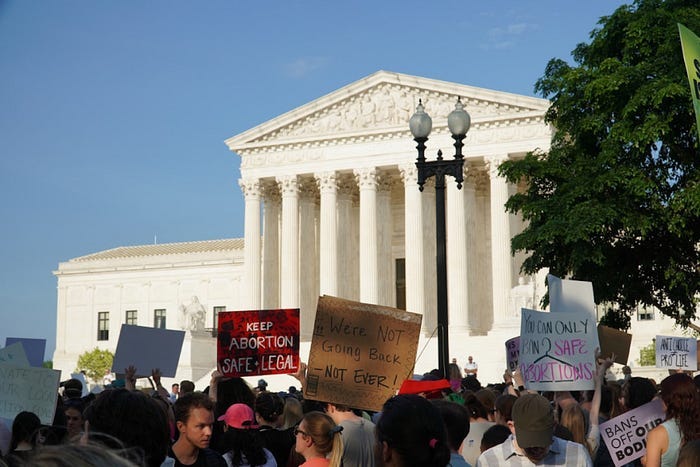
On June 30, 2026, the Supreme Court handed down West Virginia v. B.P.J., and within the hour I watched two versions of the same story go up. One said the Court had banned transgender girls from girls’ sports. The other said the Court had saved women’s sports. Both were wrong in the same way, and the reason they were wrong is buried in a single footnote that almost nobody quoted.
Here is what the Court actually did. By a vote of six to three, it held that neither Title IX nor the Equal Protection Clause stops a state from limiting girls’ and women’s sports teams to students who are, in the Court’s words, “biological females” (West Virginia v. B.P.J., No. 24–43, decided June 30, 2026, together with Little v. Hecox, No. 24–38). Justice Kavanaugh wrote the majority, joined by the Chief Justice and Justices Thomas, Alito, Gorsuch, and Barrett (SCOTUSblog case page). The West Virginia and Idaho laws survive. Becky Pepper-Jackson, the West Virginia teenager who has lived as a girl since third grade and took puberty blockers before she ever went through male puberty, loses her case (ACLU).
That’s a real loss, and I’m not going to soften it. But look at the verb. The Court said a state may do this. It never said a state must.
The footnote nobody read
The plaintiffs asked a narrow question, and the Court answered a narrow question. Justice Kavanaugh drew the line himself, in the first footnote of the opinion. The cases, he wrote, “do not present the distinct question of whether, under Title IX and the Equal Protection Clause, schools may allow biological males who identify as female to participate on girls’ and women’s sports teams. That question is currently the subject of litigation in some lower courts. Nothing in this opinion is intended to decide that question.”
Read that twice, because it is the whole game. The Court held that the Constitution doesn’t forbid a state from excluding transgender girls. It expressly refused to decide whether the Constitution requires that exclusion. Those are different sentences with different consequences, and collapsing them is the mistake almost every headline made.
An asymmetric ruling leaves the other half of the choice standing. Today, 21 states, including California and New York, let transgender girls compete, and several of them have laws on the books that protect that right (ESPN; Movement Advancement Project, data as of June 30, 2026). Nothing in B.P.J. touches those laws. As Shannon Minter of the National Center for LGBTQ Rights put it the day of the decision, the ruling “does not require states and schools that have chosen not to discriminate against transgender girls to abandon those inclusive policies.”
So the answer to the first question I keep getting asked is yes. If a state can constitutionally ban, the same ruling means a state can constitutionally allow. The Court opened one door and pointedly declined to close the other.
Why “allow” isn’t safe
Here is where I stop offering comfort, because the story doesn’t end at the footnote.
The reason inclusive-state policies survive today is that B.P.J. answered only whether Title IX permits a ban. A separate lawsuit is working through the courts right now asking the opposite question: whether letting transgender girls play is itself illegal sex discrimination against the other girls on the field. If that theory wins, the “allow” option disappears, and states like California get forced into bans they never wanted. The choice the footnote preserved gets taken away by a different case.
And the ammunition for that different case is sitting inside B.P.J. itself. To decide the Title IX question, all nine Justices agreed that “sex” in the statute means biological sex. That is the exact premise the must-exclude lawsuits need. So far, the one appellate court to rule has cut the other way. In April 2026, the Eighth Circuit rejected a challenge to Minnesota’s inclusive policy, with Judge Raymond Gruender acknowledging that the national debate over transgender participation “remains an open question of law” even as the court ruled the challengers had no private right to sue under Title IX for what amounted to a disparate-impact claim (Female Athletes United v. Ellison, No. 25–2899, 8th Cir., April 15, 2026). That was a win on a procedural technicality, not a ruling that inclusion is lawful. The merits question is still open, and it’s being pushed hard.
It’s being pushed by the federal government. The Trump administration’s Department of Education found Minnesota in violation of Title IX in September 2025 and then sued the state to force it to exclude transgender athletes (Courthouse News). This isn’t a hypothetical. There is an active, funded campaign to convert “states may ban” into “states must ban,” and B.P.J. just handed it a loaded premise.
So the allow option is real, and it’s under siege. Both things are true. Anyone who tells you only the first half is selling you a feeling.
What Congress can actually do
The second question I keep getting is whether any of this can be undone by law, or whether the Supreme Court has slammed the door for good. The answer turns on a distinction that sounds technical and is actually the difference between a dead end and an open road.
There are two kinds of constitutional rulings. One kind says the Constitution prohibits something. When the Court says that, no legislature, state or federal, can bring the thing back, because the Constitution outranks every statute. The other kind says the Constitution does not prohibit something. That kind of ruling settles nothing about what legislatures may do. It just clears them to act.
B.P.J. is the second kind. The Court did not hold that including transgender athletes violates the Constitution. It held that excluding them does not. That is a floor, not a ceiling, and Congress is free to build above a floor.
Which means Congress has real tools. Three of them.
One: amend Title IX. The Court’s Title IX holding was an act of statutory interpretation. It read the word “sex” in a fifty-year-old law and decided what Congress meant in 1972. Congress can change what the law says. It could amend Title IX to define sex to include gender identity, or to state outright that federally funded schools must let transgender students play. Because Title IX runs on Congress’s spending power, conditioning federal education money on nondiscrimination, this is the cleanest route. Justice Gorsuch, in his concurrence, all but drew the map: his objection was that current Title IX does not clearly and unambiguously require inclusion. Clear language is a thing Congress knows how to write. It’s done exactly this before. When the Court held in the 1970s that a civil rights statute did not cover pregnancy discrimination, Congress amended the statute and reversed the result.
Two: pass the Equality Act. The bill already exists. Reintroduced on April 29, 2025, by Representative Mark Takano and Senator Jeff Merkley, the Equality Act (H.R. 15 and S. 1503 in the 119th Congress) would amend the Civil Rights Act to bar discrimination based on gender identity in employment, housing, public accommodations, education, and federally funded programs. It passed the House in 2019 by a vote of 236 to 173, and again in 2021 by 224 to 206 (Congress.gov). It has never survived a Senate filibuster.
Three: know the tool that will not work, because the wall matters as much as the road. Congress cannot use its Fourteenth Amendment enforcement power to override this ruling. Under City of Boerne v. Flores, 521 U.S. 507 (1997), that power lets Congress enforce rights the Court already recognizes, not invent new ones the Court has declined to find. Since B.P.J. and Skrmetti held there is no constitutional violation here, a statute built on that enforcement power would collapse. This is exactly why the spending-power and commerce-power routes are the real ones. They do not depend on the Court finding a violation first.
None of this is a fantasy about constitutional interpretation. Statutory civil rights protections routinely reach further than the Constitution alone requires; that is what the public accommodations laws and the employment provisions of the Civil Rights Act do every day. The barrier to protecting transgender athletes nationwide is not the Constitution. It is sixty votes in the Senate. That’s a political problem, and political problems have political answers.
The pattern this fits
I have been writing about the effort to push transgender people out of shared public life for a while now, and I have learned to read these rulings as parts of a sequence rather than as isolated events.
B.P.J. is the third major transgender-rights loss at this Court in about a year, and all three broke six to three along the same lines. In June 2025, Skrmetti upheld Tennessee’s ban on gender-affirming care for minors. Passport policy, driver’s-license markers, bathroom access, shelter rules, the military: each has its own case, its own statute, its own state law, and they are moving together, not by accident. Amnesty International warned that B.P.J. itself “could pave the way for broader laws that exclude transgender people from public life altogether.”
That is the throughline, and sports is one thread of it. But a sequence is not a verdict. Some of these moves have been upheld, and some are still being fought; the difference usually lies in whether people kept fighting after the headline.
Which brings me back to the footnote.
The Court could have written the broad opinion. It could have held that the Constitution requires excluding transgender girls everywhere, and ended the argument in every state at once. It did not. It wrote the narrow one, left a door open, and said so on the record. That door is not a gift. It is a place to stand while the next case comes, and the next case is already here.
They didn’t order the ban. Make them account for every place they try to impose it anyway.
Grace Ann Hansen is an independent researcher and writer, and an MBA and PhD graduate student in health informatics and artificial intelligence. She is also a published author, a professional musician, a gymnastics coach, and a queer transgender woman living in Sioux Falls, South Dakota. All interpretation, argument, and prose are her own. Correspondence concerning this article should be addressed to Grace Ann Hansen at grace@graceannhansen.com.