

The Alien in Your Gates: A Summary
A Canonical and Historical Analysis of the Biblical Ethic Toward the Stranger and the Immigrant.

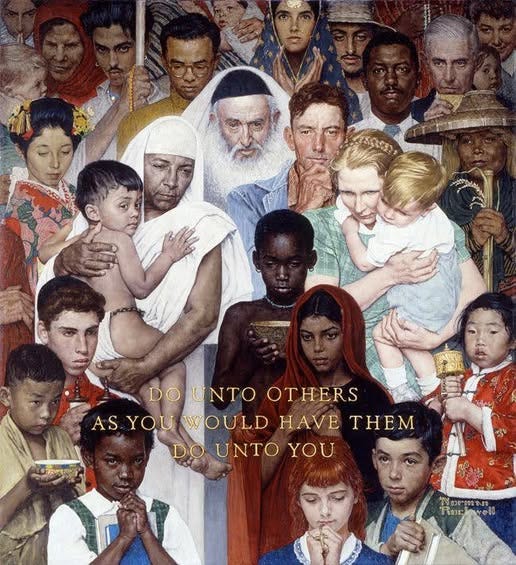
Author’s Note: This is a summary of a larger work. If you find this summary interesting, please read the original: The Alien in Your Gates. All references can be found in the original article
Finding God in the Stranger’s Face: A Journey Through the Biblical Heart of Welcome
The Bible has a lot to say about the “stranger.” But this isn’t just a theological idea. It’s a person. A face. A story.
From the very beginning, the figure of the outsider — the alien, the sojourner, the refugee — stands as a powerful, unavoidable test. How a community of faith treats the person at its margins, the one who doesn’t “belong,” becomes the ultimate measure of its spiritual integrity. The prophets were clear: the health of a nation can be measured by how it cares for its widows, orphans, and strangers.
This isn’t a side issue; it’s woven into the very fabric of the story. But to really get it, we have to look at the whole journey. We have to see how this radical ethic of welcome is born, how it gets complicated by our human fear, and how it is finally and shatteringly redefined in the person of Jesus.
It’s a journey that moves us:
From an ethic based on empathetic memory…
To an ethic based on Christological identification…
To an ethic rooted in our own shared identity as sojourners.
I: The Law of a People Who Knew What It Felt Like
The Old Testament lays a foundation that is both revolutionary and deeply pragmatic. It all starts with one core, repeated command, a kind of divine heartbeat under the text: “You must love the stranger as yourself, for you were strangers in Egypt.”
This isn’t a cold, abstract law. It’s a call to remember. God doesn’t just give a rule; He grounds it in their own pain. “You know this feeling,” He says. “You know the heart of a sojourner, the ache of being the outsider. Don’t you dare inflict that on someone else.”
This memory was built into their legal system. They had different words for different “outsiders”:
The Ger (The Resident): This was the person who was with them, the sojourner living long-term in their communities. The law was astonishing: you must have “one law” for both the native-born and the ger. They were to be given equal justice, access to the social safety net (like the gleaning laws), and a place at the table. This was a radical command of belonging.
The Nekhar and Zar (The Foreigner/Outsider): This is where it gets complicated. These terms are often applied to transient merchants or those who actively rejected Israel’s God. Here, the community drew boundaries. They weren’t to be charged interest (a law for “family”) and were excluded from sacred rituals like the Passover.
This is the tension we still live in, isn’t it? The dance between welcome and self-preservation. In the post-exilic world of Ezra and Nehemiah, this tension snapped. Faced with the fear of losing their identity, they turned to rigid boundaries and exclusion.
But the prophets wouldn’t let the people hide behind their rules. They kept dragging the conversation back to its moral center. They thundered against injustice, using the “triad of the vulnerable” — the widow, the orphan, and the stranger — as their measuring stick. In Jeremiah 7, God essentially says, “Don’t come to my temple and talk about how faithful you are if you are oppressing the stranger in your gates. Your worship is a lie.”
And then, woven into the law and prophecy, we get stories. The most powerful, of course, is Ruth. A Moabite. An outsider from a despised people. The very person the rules of exclusion were written about. And yet, through her loyalty and love, she becomes the hero. She is welcomed, protected, and woven into the very lineage of Christ. The story whispers a disruptive truth: God’s welcome has always been broader than our rules.
II: The Human Wrestle with Fear
In the quiet, uncertain centuries between the testaments, we see the community wrestle. This is where the tension becomes so… human. You can feel the community grappling with how to be faithful in a world that feels hostile.
On the one hand, a story like Tobit champions the traditional, open-hearted hospitality of Abraham as a mark of true piety.
But on the other hand, you have the Book of Sirach. And Sirach sounds like someone who’s been hurt. He’s pragmatic, cautious. “Don’t just let a stranger into your home,” he warns, “he’ll upset your family and turn them against you.” This is the voice of prudence. Maybe it’s the voice of fear. It’s a voice we all recognize. It’s the part of us that wants to lock the door and protect what’s ours.
III: The God Who Became the Stranger
And then Jesus arrives. And he doesn’t just tweak the old rules. He shatters the whole framework.
1. He Redefines “Neighbor.”
When asked, “Who is my neighbor?” — the question we are all still asking, the one we use to justify our boundaries — Jesus tells the Parable of the Good Samaritan. He makes the hero the one everyone despised. The outsider. The heretic. He completely flips the script. The question is no longer “Who deserves my love?” but “Will I be the one who shows mercy?” Full stop.
2. He Identifies with the Stranger.
This is the most radical, earth-shattering moment in the entire biblical witness. In Matthew 25, at the final judgment, Jesus looks at the blessed and says, “I was hungry and you fed me, I was thirsty and you gave me drink, I was a stranger and you welcomed me.”
The people are confused. “When did we see you, Lord?”
And his answer changes everything: “Truly I tell you, just as you did it to one of the least of these… you did it to me.”
Do you see? The motivation is no longer “Welcome them, because you were a stranger.” The motivation is now, “Welcome them, because I am the stranger.” Welcoming the outsider is no longer just a good deed; it is a direct, sacramental encounter with the Divine. It’s finding Christ in the face of the very person we’ve been told to fear.
3. He Redefines Us.
The early church ran with this. They had a special word for it: philoxenia, not just “hospitality,” but the “love of the stranger.” It was a non-negotiable, a core practice, a requirement for leadership.
But here’s the final, beautiful turn. The New Testament reframes our own identity. It tells us that we are the “sojourners and exiles” (1 Peter 2:11). It reminds us that “our citizenship is in heaven” (Philippians 3:20).
This isn’t our final home. We are all just passing through.
This changes the entire dynamic. The act of welcome is no longer an act of charity from a person who has a home to a person who needs one. It’s an act of mutual recognition. It’s one sojourner opening the door to another, saying, “I see you. We are on this journey together.”
Our Journey, Our Call
The story of the stranger in the Bible is a story of an ever-expanding welcome. It’s a call that’s always pushing us past our comfort zones, our tribalism, and our fears.
It begins with a call to memory: “Remember your own pain.”
It deepens with a call to encounter: “See my face in the stranger.”
And it ends with a call to shared identity: “Recognize that you, too, are a sojourner.”
The question, then, isn’t just “What does the Bible say about the stranger?”
The question is, “Will we be brave enough to live it?”