
Take Out Trans, and It Passes in a Minute
Pelosi refused.
Pelosi refused. The people who pressured her never left.
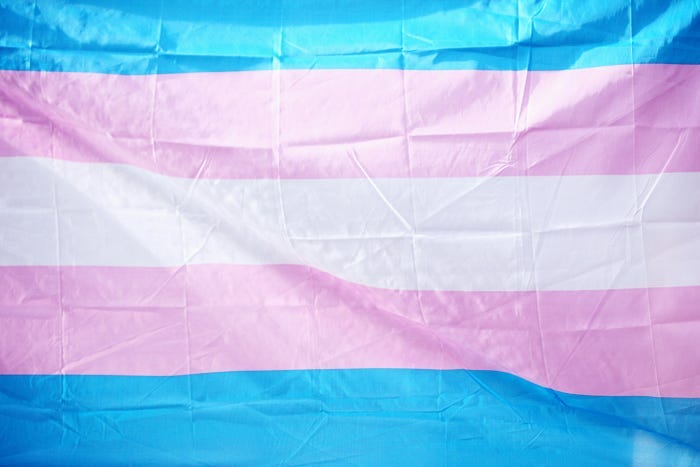
I am a transgender woman. In 2009, before I had the word for what I was, a group of people in Washington decided that protecting people like me was part of a hate crimes bill you could give away to make it move faster.
They were wrong about who would let them. Nancy Pelosi, then Speaker of the House, has now put their offer on the record. “People told me, ‘You can pass this in a minute if you take out trans,’” she told the Washington Blade this June. “I said, ‘I won’t pass it in 100 years because I’m not ever taking out trans.’ We passed it with trans protections included.”
The headlines that followed called it good news, and it is. Read the sentence again, though, and notice what it assumes. Before anyone could refuse to take trans people out, someone had to ask. The story worth telling is not the refusal. It is the request.
So I want to ask the question that the celebration skips. Who wanted trans people cut from a law about violence, and what did they think they would get for it?
What the law actually says
Start with the part that is not in dispute. The Matthew Shepard and James Byrd Jr. Hate Crimes Prevention Act became law on October 28, 2009. The statute it created, 18 U.S.C. § 249, makes it a federal crime to injure a person for their actual or perceived “religion, national origin, gender, sexual orientation, gender identity, or disability.” Gender identity is in the text. Pelosi’s “we passed it with trans protections included” is not a memory she is polishing. It is the law of the United States.
Which means the pressure she describes was a push to write a smaller law. One that would have said the federal government takes violence against a gay man seriously and has nothing to say about violence against a trans woman. That smaller law had supporters in both parties. Some of them were supposed to be on my side.
Inside the tent
The pressure on Pelosi was neither hypothetical nor new. Two years earlier, the same maneuver had already run in her own chamber, with her cooperation.
In the fall of 2007, Representative Barney Frank took the Employment Non-Discrimination Act, a bill barring employers from firing workers for being gay or transgender, and split it. He introduced a version covering sexual orientation that dropped gender identity, arguing the votes for an inclusive bill were not there. The gay-only version passed the House 235-184 on November 7, 2007. Pelosi brought it to the floor.
The reaction told everyone what had happened. More than 300 LGBTQ organizations formed a coalition called United ENDA to fight the split, refusing a bill that protected part of the community by leaving the rest out. Frank’s defense then is the same one offered for every version of this trade. Years later, he put it plainly: the transgender community, he told Georgia Voice, had a “mistaken view that if Nancy Pelosi waved a magic wand, transgender would be included,” and the votes simply were not there.
To her credit, Pelosi spent that fight trying to undo the damage, backing an effort by Representative Tammy Baldwin to restore gender identity. That effort was lost. The lesson she seems to have taken from it shows up two years later, when the people doing the vote math came back with the same offer on hate crimes, and she refused it. That is the inside of the tent: trans people as the part you sacrifice for the win, and one leader who decided, the second time, not to.
Outside the tent
The reason the votes were short is that they have names.
In public, the opposition wore a suit. The bill was unnecessary, its opponents said, a federal intrusion on work the states already did. When the House first passed an inclusive version in 2007, the Bush White House issued a veto threat the same day, objecting that there was “no persuasive demonstration of any need to federalize” such a large range of violent crime. Representative Tom Cole called it a “thought crimes bill” that would divide Americans “into different classes of people subject to different protections under the law.” Equal protection, they argued, meant no special protection. It was a respectable argument, and it was a costume.
Underneath it was something else. On the House floor on April 29, 2009, with Matthew Shepard’s mother watching from the gallery, Representative Virginia Foxx called the murder that gave the bill its name “a hoax,” insisting the young man “was killed in the commission of robbery. It wasn’t because he was gay.” She later called “hoax” a poor choice of words. Judy Shepard, who had been sitting a few feet away, said the apology was “for semantics but not her sentiment, her insensitivity or her ignorance.”
The same week, Representative Steve King told Fox News the bill would create “special protection for pedophiles,” a claim PolitiFact rated false, noting that federal law already defines sexual orientation as heterosexuality or homosexuality and excludes pedophilia. Representative Louie Gohmert went further on the floor, warning that protecting people from violence based on orientation would mean striking the laws against sex with “animals,” “corpses,” and “children,” and would walk the country toward 1930s Germany.
None of that was about federalism. You do not reach for bestiality and Nazi Germany to make a point about which level of government prosecutes assault. The procedural objection was the public reason. The contempt was the real one. And the contempt is what set the vote count, which the people inside the tent then cited when they told Pelosi to make it easier on herself.
That is the turn the good news hides. Expediency and hate were never two stories. The expedience was the hate, run through an adding machine. When an advisor said, “You can pass this in a minute if you take out trans,” the minute he was promising had been bought by Foxx and King and Gohmert, by every member whose vote came free only if my existence stayed outside the law’s protection.
One fact disposes of the stated reason entirely. The bill, the opponents called a gag on pastors, contained an evidentiary rule barring a defendant’s speech and associations from being used against him at trial except where they related directly to the crime. The claim that it would muzzle preachers was false on its face, as a matter of the statute its critics were reading. They made it anyway, which tells you the argument was never the point.
Why
So, the question my editor would say I have been circling. Why? What did the people leaning on Pelosi actually want?
I cannot read what was in their hearts, and I am not going to pretend the record lets me. What the record shows is a goal more durable than any single vote. They wanted trans people to stay the negotiable category. Not protected, not even singled out for harm, just available, the line you can always offer up when a deal needs grease. To cut us from a law about violence is to enter a quiet verdict that violence against us counts for less. That verdict, not any one congressman’s disgust, is the thing they were defending.
It is the same verdict being entered right now.
The same minute, again
In January 2025, the President signed an executive order titled “Defending Women from Gender Ideology Extremism and Restoring Biological Truth to the Federal Government.” Read the title slowly. It seats the word “extremism” beside an identity in the heading of a federal directive. Gregory Stanton, who developed the framework the field uses to track how this escalates, lists classification, symbolization, and dehumanization as early stages. An official document that files a minority under “extremism” is not being shy about which stage it performs.
The line is being cut in real time. In June 2026, Lambda Legal sued the Department of Health and Human Services over new rules barring Ryan White HIV program funds from being used to acknowledge or treat transgender patients, pulling trans people out of a program that has kept low-income people with HIV alive for three decades. Days earlier, a federal judge blocked the Bureau of Prisons from transferring fourteen transgender women into men’s prisons, in a system where, by the government’s own data, trans people are sexually assaulted at nearly ten times the rate of other prisoners. Pelosi, who retires in 2027, named the pattern herself last year. “The trans issue is what they have glommed onto,” she told The Advocate.
Take out trans, and the program runs cheaper. Take out trans, and the prison policy gets simpler. Take out trans, and the bill passes in a minute. It is the same sentence every time, and trans people are always the words being removed.
What it cost
I came out at fifty-three. I do not get those years back, and most days I have made my peace with that. What I have not made peace with is watching, in real time, an argument I thought my country had finished.
In 2023, the FBI recorded 492 hate crimes based on gender identity, the highest annual total since it added the category in 2013. That is the number the Matthew Shepard Act exists to count. The law that almost got me cut out is now the law measuring how often people like me are attacked, and the count climbs as the same coalition works to pull the protections back out. The people who told Pelosi to drop us were not wrong that it would have been easier. They were wrong about what easier was worth.
She gave them a hundred years. The people now reaching for the same minute should understand that some of us intend to make it cost at least that long.
I am still here. We are the line they keep trying to delete, and we are still in the text.
Author Note. Grace Ann Hansen is an independent researcher and writer, and an MBA & PhD graduate student in health informatics and artificial intelligence. She is also a published author, a professional musician, a gymnastics coach, and a queer transgender woman living in Sioux Falls, South Dakota. All interpretation, argument, and prose are her own. Correspondence concerning this article should be addressed to Grace Ann Hansen at grace@graceannhansen.com.


