

Does Belief in God Beat the Alternative?
A skeptic reads the Project Hail Mary scene about God.

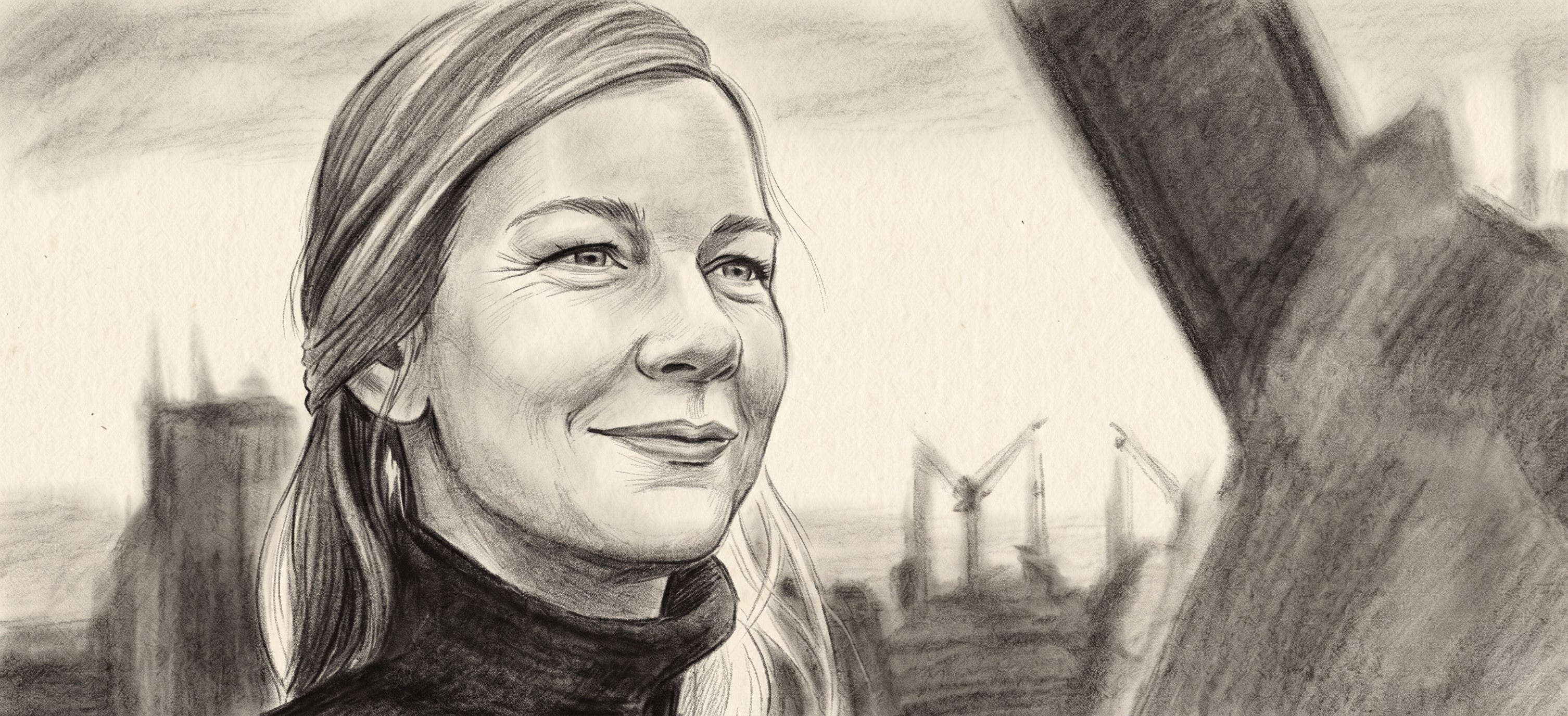
I never got out to the theater to see Project Hail Mary. I loved the book. I just didn’t have the time. I saw last night, in my Apple TV app, that it was available to purchase for streaming. So I did. Purchase it. Then I went about doing laundry while the movie played on top of the dryer while I folded clothes.
Eva Stratt, in the movie, Project Hail Mary, says that believing in God beats the alternative. People are reading the line as quiet faith. That misreads it.
The scene is not in Andy Weir’s 2021 novel. Phil Lord and Christopher Miller’s 2026 film adaptation added it (O’Hare, 2026; Curtis, 2026). Sandra Hüller’s Stratt, a woman who has spent the runtime authorizing nuclear detonations in Antarctica and ordering a scientist to a one-way orbit around a dying sun, lets the question sit, half-smiles, and answers like a person who has run the math.
It beats the alternative.
Half the people I have heard quote that line have heard it as a confession of quiet faith. I do not think that is what Stratt was saying.
What the line actually does
Stratt is not making a metaphysical claim. She is making an operational one. Belief in God, on her account, performs better than the substitute the project requires of her. She does not say God exists. She says she would rather believe than not, and she would rather not explain it further.
That is a serviceable position. It has a long résumé in philosophy. William James, in his 1896 lecture “The Will to Believe,” argued that under conditions of “live, forced, momentous” choice, where staying agnostic is itself a choice with consequences, a person can rationally elect to believe even before the evidence has settled the question (James, 1896). Blaise Pascal’s wager, in the Pensées published posthumously in 1670, runs along the same coastline. Both arguments concede that the evidence does not settle the question. Both treat the act of believing as something a rational person can elect when the alternatives have been weighed.
That is the line Stratt is borrowing from. She is not Augustine. She is not even the Sunday-morning person down the row from me at Springdale Lutheran. She is a competent, cornered woman picking a frame to operate under, and the frame she picks has lower long-term overhead than the one without God in it.
The alternative isn’t what people think it is
The trouble with “it beats the alternative” is that the alternative depends on the speaker.
For a certain kind of religious person, the alternative to belief is despair. A meaningless universe. A morality without ground. The dread of being a small animal in a bigger animal’s mouth. Belief, set against that floor, looks like a reasonable upgrade.
For a certain kind of atheist, the alternative to belief is not despair. It is the relief of not having to argue with a deity about why this should have happened. It is the freedom of treating suffering as bad without filing it under a divine plan. The alternative to belief is, for them, a different kind of peace.
So whose alternative are we measuring belief against?
The interesting case is the third one. The case where the alternative is not despair and is not relief. The case where the alternative is honesty about both.
Hart and the wave
In December 2004, a fault under the Indian Ocean slipped, and a wave climbed the Sumatran coast and killed roughly 227,898 people across fourteen countries. The Eastern Orthodox theologian David Bentley Hart published a short book in response the following year. He rejected two answers to the wave. The first was the atheist answer that used the disaster as proof of no God. The second, which he treated more harshly, was the theological answer that folded the dead into a redemptive plan that required them.
“In another and ultimate sense,” Hart wrote in The Doors of the Sea (2005), “suffering and death, considered in themselves, have no true meaning or purpose at all.”
That sentence is the hinge for me.
What Hart is saying is that the cheap version of “belief beats the alternative” is the version that uses God as a meaning-machine, conscripted to extract redemption from every drowning. If that is what belief in God is for, then belief loses the contest. The atheist who refuses to pretend the wave was a message is being more honest about the wave than the theologian who pretends it was.
The belief that beats the alternative, on Hart’s terms, is the one that names suffering as the enemy of God’s intention rather than as God’s instrument. The belief that beats the alternative is the one that, when the wave comes, picks up the wounded.
That is not the belief most people on this continent mean when they invoke God on a marquee.
The skeptic in the pew
I am still on the rolls at a Lutheran congregation in rural South Dakota. I was baptized at eight weeks old. I was confirmed at thirteen. I still volunteer on the audio-visual team. When the pastor preaches, the livestream works because I made sure of it.
I am also, on a lot of Sundays, the person in the pew with my head in my hand trying not to shake it at the recited words.
I am at peace with not knowing what God is. I am not at peace with what human beings have done with God. I am specifically not at peace with the marquee on Minnesota Avenue that taught me, over six years of driving past it on my way home from coaching, that its God is built to identify and exclude the woman I am.
If I had answered Ryland Grace’s question across that briefing-room table, I would not have said it beats the alternative. I would have said it depends on which alternative you mean. The alternative of pretending the world is a mechanical accident with no reverence in it, I do not want. The alternative of pretending the world is a managed redemption project in which my queerness, or someone’s drowning, is part of the curriculum, I do not want either.
What I want is a third position. I want belief that does not lie about the cost.
What actually beats the alternative
Stratt’s line works because it does not promise much. It does not promise heaven. It does not promise a plan. It promises a working stance from which a person can keep ordering the impossible things the survival of the species requires of her.
Read that way, yes. It beats the alternative.
But the alternative it beats is not unbelief. It is the kind of belief that pretends. The kind of belief that lets the wave become a sermon and lets the marquee become a doctrine. The kind of belief that uses God as a shortcut around the unbearable arithmetic of being a person who has to decide.
Stratt does not do that. Stratt is, for the length of one half-smile, a credible Lutheran. She holds the question. She does not solve it. She keeps the work. She does not pretend the work is anyone’s plan but her own.
The rest of us, on the side of the briefing-room screen where the camera is, are allowed the same posture. We can believe in something larger than ourselves without claiming to know its wishes. We can light a candle without filing the candle under a redemptive plan. We can sit in a pew and shake our heads at the recited words and stay anyway, because the people in the pew are our people and the work in the building is real.
That is what beats the alternative.
Not the comfort. The honesty.
Author Note:
Grace Ann Hansen is an independent researcher and writer, and an MBA & PhD graduate student in health informatics and artificial intelligence. She is also a published author, a professional musician, a gymnastics coach, and a queer transgender woman living in Sioux Falls, South Dakota. She corrects all her papers and articles with Grammarly, because even though she has deep thoughts, she has shallow patience for punctuation. She uses Anthropic’s Claude in Research mode for source location and verification on cited factual claims; all interpretation, argument, and prose are her own. Correspondence concerning this article should be addressed to Grace Ann Hansen at grace@graceannhansen.com.
References
Curtis, H. (2026, April 13). Project Hail Mary can’t outrun the God hypothesis. Science and Culture Today.
Hart, D. B. (2005). The Doors of the Sea: Where Was God in the Tsunami? Eerdmans.
James, W. (1896). The Will to Believe. Project Gutenberg.
O’Hare, K. (2026, March). ‘Project Hail Mary’: Thrilling sci-fi that’s full of grace. Patheos.
Pascal, B. (1670). Pensées. Project Gutenberg.
Weir, A. (2021). Project Hail Mary. Ballantine Books.
I never got out to the theater to see Project Hail Mary. I loved the book. I just didn’t have the time. I saw last night, in my Apple TV app, that it was available to purchase for streaming. So I did. Purchase it. Then I went about doing laundry while the movie played on top of the dryer while I folded clothes.
Eva Stratt, in the movie, Project Hail Mary, says that believing in God beats the alternative. People are reading the line as quiet faith. That misreads it.
The scene is not in Andy Weir’s 2021 novel. Phil Lord and Christopher Miller’s 2026 film adaptation added it (O’Hare, 2026; Curtis, 2026). Sandra Hüller’s Stratt, a woman who has spent the runtime authorizing nuclear detonations in Antarctica and ordering a scientist to a one-way orbit around a dying sun, lets the question sit, half-smiles, and answers like a person who has run the math.
It beats the alternative.
Half the people I have heard quote that line have heard it as a confession of quiet faith. I do not think that is what Stratt was saying.
What the line actually does
Stratt is not making a metaphysical claim. She is making an operational one. Belief in God, on her account, performs better than the substitute the project requires of her. She does not say God exists. She says she would rather believe than not, and she would rather not explain it further.
That is a serviceable position. It has a long résumé in philosophy. William James, in his 1896 lecture “The Will to Believe,” argued that under conditions of “live, forced, momentous” choice, where staying agnostic is itself a choice with consequences, a person can rationally elect to believe even before the evidence has settled the question (James, 1896). Blaise Pascal’s wager, in the Pensées published posthumously in 1670, runs along the same coastline. Both arguments concede that the evidence does not settle the question. Both treat the act of believing as something a rational person can elect when the alternatives have been weighed.
That is the line Stratt is borrowing from. She is not Augustine. She is not even the Sunday-morning person down the row from me at Springdale Lutheran. She is a competent, cornered woman picking a frame to operate under, and the frame she picks has lower long-term overhead than the one without God in it.
The alternative isn’t what people think it is
The trouble with “it beats the alternative” is that the alternative depends on the speaker.
For a certain kind of religious person, the alternative to belief is despair. A meaningless universe. A morality without ground. The dread of being a small animal in a bigger animal’s mouth. Belief, set against that floor, looks like a reasonable upgrade.
For a certain kind of atheist, the alternative to belief is not despair. It is the relief of not having to argue with a deity about why this should have happened. It is the freedom of treating suffering as bad without filing it under a divine plan. The alternative to belief is, for them, a different kind of peace.
So whose alternative are we measuring belief against?
The interesting case is the third one. The case where the alternative is not despair and is not relief. The case where the alternative is honesty about both.
Hart and the wave
In December 2004, a fault under the Indian Ocean slipped, and a wave climbed the Sumatran coast and killed roughly 227,898 people across fourteen countries. The Eastern Orthodox theologian David Bentley Hart published a short book in response the following year. He rejected two answers to the wave. The first was the atheist answer that used the disaster as proof of no God. The second, which he treated more harshly, was the theological answer that folded the dead into a redemptive plan that required them.
“In another and ultimate sense,” Hart wrote in The Doors of the Sea (2005), “suffering and death, considered in themselves, have no true meaning or purpose at all.”
That sentence is the hinge for me.
What Hart is saying is that the cheap version of “belief beats the alternative” is the version that uses God as a meaning-machine, conscripted to extract redemption from every drowning. If that is what belief in God is for, then belief loses the contest. The atheist who refuses to pretend the wave was a message is being more honest about the wave than the theologian who pretends it was.
The belief that beats the alternative, on Hart’s terms, is the one that names suffering as the enemy of God’s intention rather than as God’s instrument. The belief that beats the alternative is the one that, when the wave comes, picks up the wounded.
That is not the belief most people on this continent mean when they invoke God on a marquee.
The skeptic in the pew
I am still on the rolls at a Lutheran congregation in rural South Dakota. I was baptized at eight weeks old. I was confirmed at thirteen. I still volunteer on the audio-visual team. When the pastor preaches, the livestream works because I made sure of it.
I am also, on a lot of Sundays, the person in the pew with my head in my hand trying not to shake it at the recited words.
I am at peace with not knowing what God is. I am not at peace with what human beings have done with God. I am specifically not at peace with the marquee on Minnesota Avenue that taught me, over six years of driving past it on my way home from coaching, that its God is built to identify and exclude the woman I am.
If I had answered Ryland Grace’s question across that briefing-room table, I would not have said it beats the alternative. I would have said it depends on which alternative you mean. The alternative of pretending the world is a mechanical accident with no reverence in it, I do not want. The alternative of pretending the world is a managed redemption project in which my queerness, or someone’s drowning, is part of the curriculum, I do not want either.
What I want is a third position. I want belief that does not lie about the cost.
What actually beats the alternative
Stratt’s line works because it does not promise much. It does not promise heaven. It does not promise a plan. It promises a working stance from which a person can keep ordering the impossible things the survival of the species requires of her.
Read that way, yes. It beats the alternative.
But the alternative it beats is not unbelief. It is the kind of belief that pretends. The kind of belief that lets the wave become a sermon and lets the marquee become a doctrine. The kind of belief that uses God as a shortcut around the unbearable arithmetic of being a person who has to decide.
Stratt does not do that. Stratt is, for the length of one half-smile, a credible Lutheran. She holds the question. She does not solve it. She keeps the work. She does not pretend the work is anyone’s plan but her own.
The rest of us, on the side of the briefing-room screen where the camera is, are allowed the same posture. We can believe in something larger than ourselves without claiming to know its wishes. We can light a candle without filing the candle under a redemptive plan. We can sit in a pew and shake our heads at the recited words and stay anyway, because the people in the pew are our people and the work in the building is real.
That is what beats the alternative.
Not the comfort. The honesty.
Author Note:
Grace Ann Hansen is an independent researcher and writer, and an MBA & PhD graduate student in health informatics and artificial intelligence. She is also a published author, a professional musician, a gymnastics coach, and a queer transgender woman living in Sioux Falls, South Dakota. She corrects all her papers and articles with Grammarly, because even though she has deep thoughts, she has shallow patience for punctuation. She uses Anthropic’s Claude in Research mode for source location and verification on cited factual claims; all interpretation, argument, and prose are her own. Correspondence concerning this article should be addressed to Grace Ann Hansen at grace@graceannhansen.com.
References
Curtis, H. (2026, April 13). Project Hail Mary can’t outrun the God hypothesis. Science and Culture Today.
Hart, D. B. (2005). The Doors of the Sea: Where Was God in the Tsunami? Eerdmans.
James, W. (1896). The Will to Believe. Project Gutenberg.
O’Hare, K. (2026, March). ‘Project Hail Mary’: Thrilling sci-fi that’s full of grace. Patheos.
Pascal, B. (1670). Pensées. Project Gutenberg.
Weir, A. (2021). Project Hail Mary. Ballantine Books.
Grace-What hits me is the quiet assumption that the human ego is somehow capable of adjudicating what kind of God, transcendence, or metaphysical structure is morally acceptable to it. That itself may be the inflation. I increasingly suspect that whatever consciousness, intelligence, field, or “God” exists behind things is so vastly beyond the interpretive capacities of the human ego that all of our formulations, religious and skeptical alike, are partial accommodations rather than conclusions. The modern mind often critiques religion for pretending certainty while simultaneously assuming its own ethical and intellectual frameworks are sufficient to evaluate ultimate reality. I am no longer convinced either side truly knows what it is handling.
And perhaps that is the point: Not certainty. Not doctrinal confidence. Not militant skepticism.
....Humility.
Whatever allows a human being to remain ethical, open-hearted, psychologically alive, and capable of enduring tragedy without collapsing into cruelty or nihilism may be sufficient orientation for a mortal life. The rest may belong to mysteries that do not require our agreement in order to exist. I no longer think the deepest spiritual question is whether belief “beats the alternative.” I think the deeper question is whether the ego is capable of recognizing that it is not the measure of the cosmos. Sheila Grace
https://shapeofcinema.substack.com/p/pigs-in-space?r=8dbojf&utm_medium=ios