


WOMEN’S SPORTS
The women won me over one athlete at a time, and a boy did the rest
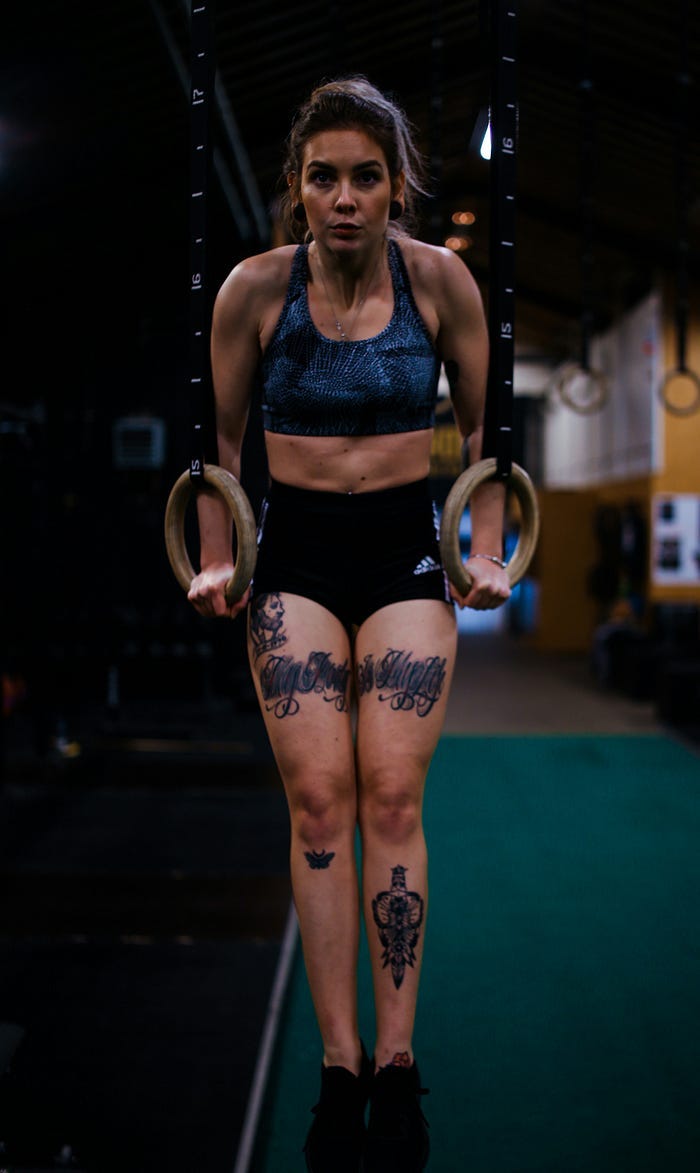
I never had much use for sports. Growing up, what I saw was men being macho, and macho made me uncomfortable. Athletes, in my experience, translated into bullies, and the bullies were the ones making my everyday life miserable. So I did the sensible thing a kid does when something hurts. I built distance. A healthy wall between me and sports, and between me and the jocks on the other side of it. By the time I was grown, the wall was just part of the architecture. Sports were what other people cared about.
What slowly got through the wall was the women.
It started young and by accident. I grew up watching tennis and figure skating, usually because the Olympics were on, or because it was Wimbledon fortnight and the television was tuned to it. My parents were golf fans, so every Sunday, a tournament was played in the background. I’ll say this for the PGA: the hushed voices of the announcers gave me some of the best naps of my life. But when the LPGA was on, something was different. I stayed awake. I couldn’t have told you why at the time.
The WNBA started in 1997, and my interest grew like a slow tide, an inch at a time over the years. In 2001, I watched Jennie Finch, probably the most famous softball player who ever lived, put together a perfect 32–0 season at Arizona, the only one in NCAA softball history, throwing no-hitters on the way to a national title, and then go to Athens in 2004 and bring home Olympic gold.
The basketball stayed a slow roll for me right up until Caitlin Clark and Angel Reese met in the 2024 NCAA final, a game that felt like a brawl waiting to happen, all that talent and animosity crammed into forty minutes, and then both of them went straight to the pros.
In 2024, the PWHL finally started playing, after years of false starts for women’s professional hockey. Soccer barely registered for me, with one exception that kept repeating: the United States women’s national team kept winning Olympic gold, in 1996, then 2004, 2008, 2012, and again in 2024. Then I watched “Ted Lasso,” the show about an English men’s football club, and I’ll admit it was great. Did it make me a fan of men’s soccer? It did not. I started tuning in to the NWSL. What did you expect?
I’ll put in a word here for women’s beach volleyball, too. Kerri Walsh Jennings and Misty May-Treanor were two of the best players on the planet for the better part of a decade, winning three straight Olympic golds from 2004 to 2012. I never missed those matches.
Through all of this, I could not have been paid to watch men play sports. With one standing exception: the Super Bowl. For the commercials, obviously.
But there was a second thread running beneath the entire timeline, and it became the exception that actually mattered.
Learning the men’s side
Women’s gymnastics was always there. I watched it now and then, the way you watch something every four years and then forget about it. Then I became a mother, and everything about how I watched it changed. My youngest son wanted to watch gymnastics, so that’s what we did, the two of us, in front of the television. And then that same kid got a little older and decided he didn’t want to be a gymnast. He needed to be one. I mean that exactly. It wasn’t a preference. It was an imperative that he could not be talked out of.
There was a problem. Eastern South Dakota did not have men’s gymnastics coaches. So I changed jobs. I changed my schedule. Then, with my son as my only athlete, I became a gymnastics coach four hours a day, six days a week, and I learned men’s artistic gymnastics from the ground up, the way a coach has to learn it and not the way a fan picks it up from the couch. Six events instead of the women’s four. Floor, pommel horse, still rings, vault, parallel bars, and high bar. I learned why the iron cross on still rings is a feat of raw strength that looks like stillness, why the pommel horse is the event that quietly breaks people, why a clean release-and-catch on high bar should terrify everyone watching and usually doesn’t, because the gymnast made it look easy.
So yes, I’ll admit to an affinity for men’s artistic gymnastics, at any level. If there’s one men’s sport that gets watched in my house, it’s that one. When Stephen Nedoroscik took off his glasses at the 2024 Paris Olympics and hit a pommel horse routine that helped the American men win their first team medal in sixteen years, then took an individual bronze of his own, I wasn’t watching a meme. I was watching the one men’s event I’d spent years learning to read, finally getting seen. And I’m still coaching today, ten years later, working with little boys learning the art of controlling their bodies and defying gravity, though not as many hours a week as I once put in.
That’s the exception. It’s specific, it’s personal, and it’s earned. Everything else points the other way, and it’s worth being honest about why.
What I walked away from
Here is the part that connects back to that wall I built as a kid. When I look at men’s professional sports now, I see the grown-up version of exactly what I walked away from. The macho posturing. The entitlement. The sense that the games exist to give a certain kind of man a stage. I’m not going to dress that up as a clean statistic. The honest version is narrower than the slogan. Studies of arrest records actually find that NFL players, for one, get arrested at lower rates than the national average for men their age. But certain categories, domestic violence among them, were a problem the leagues spent years refusing to take seriously, and the culture that allowed that is the same culture I recognized on the playground a long time ago. I don’t enjoy watching it. After everything, I think that’s allowed to be a reason.
There is a second reason, and it’s even more honest. I will never reach the athletic level of an elite man, and I know exactly why. The performance gap between top men and top women is real and well measured. It runs around ten to twelve percent across most running events, a little narrower in the shortest sprints and wider at the longest distances. Men carry more muscle, denser bone, higher testosterone, and a bigger engine: elite women’s peak oxygen uptake runs roughly ten to twenty percent below men’s, depending on the sport. None of that is in dispute, and I have no interest in pretending it away.
What they do with it
Here’s the turn. That gap is the whole reason the women move me. When the ceiling was lower, and the resources were thinner for most of the sport’s history, every inch of mastery had to be fought for against the grain. Men’s excellence, I can admire the way I admire a tall building. Women’s excellence. I admire the way I admire someone who built the building after being told for a century she couldn’t hold a hammer.
Look at what they do with it.
Lindsey Vonn won four overall World Cup titles and an Olympic downhill gold, the first ever for an American woman, and retired in 2019 with 82 World Cup victories, the most by any woman at the time. In 2012, she asked to race a men’s World Cup downhill. The international federation said no, ruling that one gender isn’t entitled to enter the other’s races. She was candid that she’d be only averagely competitive against the men. The point was never to win. The point was to measure herself against the fastest skiers alive.
When she finally skied the men’s Streif course at Kitzbühel in 2023, the run that terrifies the men who race it for time, she came down and said she had even more respect for them now. Then she returned to ski racing at 40, after a partial knee replacement. At forty, she became the oldest woman ever to reach a World Cup podium, and the following season, at forty-one, she won a World Cup downhill outright, the oldest racer of any gender ever to win one. That is what working for every advantage looks like.
Simone Biles is the most decorated gymnast in history, with 41 Olympic and World Championship medals between them, and five skills named after her because no one else will attempt them. The federation that governs her sport has at times deliberately scored her hardest skills lower than their difficulty warrants, openly, to keep other women from breaking themselves trying to copy her.
Think about what that means. She is so far ahead that the rulebook treats her as a hazard. In Tokyo, she pulled herself out of finals when she lost her air awareness in the middle of a twisting vault, a genuinely dangerous thing, and took the public heat for putting her body and mind first. Then she took two years away, came back, and won three more golds in Paris. The men’s side of her sport is the one I coach. I watch her side because I’m seeing the outer limit of what a human body can be taught to do.
