

I sent 500 applications and blamed the machines
The auto-rejecting robot is mostly a myth, but the truth about what happens to a sixty-year-old woman’s resume is worse Continue reading on The Human Residue »

THE HUMAN RESIDUE
The auto-rejecting robot is mostly a myth, but the truth about what happens to a sixty-year-old woman’s resume is worse
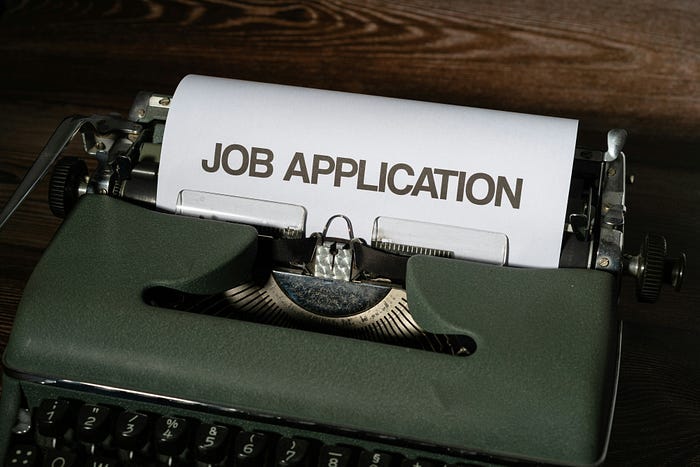
Last November, my job ended. Since then, I have applied for work five hundred times.
That’s not a figure of speech. I know the number is five hundred since I kept a list, one row for every application, one column for the reply that came back. The reply column is empty. Not a single rejection I could argue with. Not one interview. Not one recruiter writing to say I came close and to try again next quarter. Just the date I applied, and then white space, five hundred rows down.
I spent thirty-five years in information technology and technical project management. I am good at the work. I am sixty years old and a woman, and I’ve started to suspect those two facts now matter more than the thirty-five years put together.
For months I told myself a story about the empty column. The story was about software. Somewhere between my resume and a human being, I decided, a machine was reading my application, scoring it against a hidden rubric, and dropping it in the bin before anyone saw my name. I’d heard the statistic everyone’s heard, the one that says three out of four resumes are killed by an applicant tracking system before a person ever looks. It felt right. It explained the silence. Best of all, it let the silence be about a robot instead of about me.
So, I went looking for the study behind that number.
There isn’t one.
The robot everyone blames is mostly a myth
The seventy-five percent figure traces back to a 2012 sales pitch from a company called Preptel, which sold a service to help you beat the very robots it was warning you about. Preptel folded the next year. No study, no data set, no method was ever published. The number simply kept getting repeated, sliding to seventy percent in one place and eighty-eight in another, the way a figure drifts when nobody can point to where it began. Recruiters who run these systems for a living will tell you that most applications are seen by a human, and that a resume the software cannot read is not deleted but handed to a person to sort by hand. The auto-rejecting robot I’d been blaming, the one quietly deleting me at the door, mostly isn’t real.
I wanted that to be a relief. It wasn’t. When I kept reading, I found that the truth is worse than the robot, and the robot was at least simple. You could picture beating it with the right keywords. What is actually happening has no keyword and no off switch.
The filters that are real
Start with the filters that are real. A 2021 study from Harvard Business School and Accenture, built on surveys of more than eight thousand workers and two thousand employers, found that eighty-eight percent of companies admit their own systems screen out qualified people for failing to match the exact wording of a job posting. The same study found that forty-nine percent of employers set their software to automatically reject anyone with a gap in employment longer than six months.
Read that again with my list in mind. I was laid off in November. By spring I had a six-month gap I didn’t choose, and half the companies I wrote to had a switch flipped that rejected me for it before a person read a word. The gap did not measure whether I could do the job. It measured how long the machine had already been rejecting me.
When the bias is written into the code
Then there is the part that is not a filter but a bias, and this bias leaves a paper trail. In 2018, Amazon scrapped a recruiting engine it had spent years building, once it realized the thing had taught itself to downgrade any resume containing the word “women’s.” Women’s chess club. Women’s college. It learned that from a decade of the company’s own mostly male hiring, and it did exactly what it had been trained to do.
In 2023, the Equal Employment Opportunity Commission settled its first case over hiring software. A tutoring company had programmed its application system to reject women aged fifty-five and up and men aged sixty and up, automatically, on sight. More than two hundred qualified people were thrown out by a rule someone typed into the code. They caught it by accident: one woman was rejected, reapplied with a more recent birthdate and nothing else changed, and got an interview. The company paid $365,000.
I am a woman over fifty-five. I read that settlement the way you read a horoscope that turns out to be a diagnosis.
In 2025, a federal judge let an age-discrimination case against Workday go forward as a nationwide collective action. Workday’s screening software sits behind a large share of the companies I have applied to. In the course of that case, the company acknowledged that its systems had rejected more than one billion applications during the window at issue. One billion. The judge observed that telling everyone who might be affected could invite hundreds of millions of plaintiffs. That is the size of the machine I’ve been dropping my resume into, one polite PDF at a time.
Never the right age
Here is the piece that sits closest to the bone. The research on hiring does not treat “old” and “woman” as two separate penalties you add up. It treats them as one compounded drop. The largest resume experiment of its kind, tens of thousands of applications sent to real openings, found that older women were called back far less often than younger applicants, a gap of nearly half. There’s a name for it, gendered ageism, the particular way a woman is informed she is never the right age, too green to be trusted and then, with no visible line in between, too old to hire.
I crossed that invisible line without noticing, somewhere in the years I was busy being good.
The market did the rest
None of this is happening in a calm market. I am hunting for work in the worst technology hiring stretch in living memory. More than a hundred thousand tech jobs went in the United States in 2025, and the cutting has not slowed. Through the first half of 2026, employers blamed artificial intelligence for over a hundred thousand more cuts, naming it as the reason four months running. Companies are drowning in applications, so many that hiring people describe drinking from a fire hose, and a large share of the jobs on offer are never filled at all, phantom listings posted to gather resumes or to reassure a board. So when I tell you five hundred applications produced zero replies, understand this is not a number proving something is wrong with me. It is a number the system is built to produce.
For one brief stretch, someone with authority had called this a problem. In 2023 the EEOC published guidance on how existing civil rights law applies to hiring algorithms. In January 2025 the agency took that guidance off its website. The machines kept running. The page explaining how to hold them to account came down.
What is left over
So, I stopped waiting for the reply column to fill. I enrolled in a PhD program in artificial intelligence, which is either the best joke I’ve told in years or the only sane answer to being erased by a technology, depending on the afternoon you catch me. I mean to teach. I figure I have twenty good years of it left, standing in front of a room of people still permitted to be surprised by an old woman who knows things. Between now and then, I write. Essays like this one. Romance novels under names not quite my own, which pay better than you’d guess, and better, lately, than three decades of doing work a machine has ruled it can’t see.
The systems I’ve described are very good at reading a resume and deciding what a person is worth. They can count backward from a graduation date. They can flag a six-month gap. They can score the shape of a whole career against a template and move on in the time it takes to blink. What they still can’t do is the thing I actually did for a living. They can’t stand in a room with a frightened project team the Friday before a launch and know which person needs steadying and which needs pushing. They can’t write the sentence that makes a stranger put the book down and cry. They cannot want a single thing.
That’s the part of me the machine cannot see. It’s turning out to be the part that was the job all along.
A note on how this piece was made, since this publication insists on it: I used Anthropic’s Claude, in its research mode, to find and verify the studies, settlements, and figures above. Every one of them links to its source so you can check my work. What I made of them, the argument and the anger and the choice of what mattered, is mine.
Author Note. Grace Ann Hansen is an independent researcher and writer, and an MBA & PhD graduate student in health informatics and artificial intelligence. She is also a published author, a professional musician, a gymnastics coach, and a queer transgender woman living in Sioux Falls, South Dakota. All interpretation, argument, and prose are her own. Correspondence concerning this article should be addressed to Grace Ann Hansen at grace@graceannhansen.com.