

I Build the Locks. They Call Me the Thief.
What a blanket “no AI” rule costs the people trying to keep you safe.

What a blanket “no AI” rule costs the people trying to keep you safe.
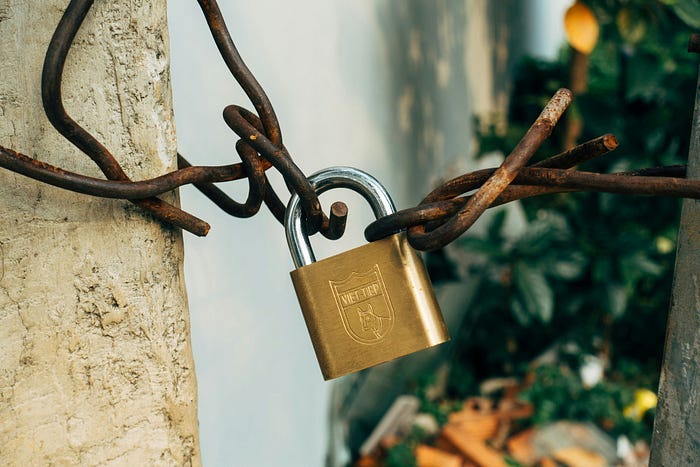
A man I respect read the words “AI for Everybody” and decided I was a liar.
The phrase sits over the fourth lesson in a beginner’s series I write for a publication called Artificial Intelligence in Plain English. The series exists for the person who hears “large language model” and feels their eyes glaze over. No code. No jargon. Cooking analogies about casserole dishes and bake times. The title follows a convention older than the current panic. Andrew Ng’s well-known course, AI for Everyone, opens by promising that the subject is “not only for engineers.” Everybody, in that sentence, names the audience. It isn’t a verdict on whether the technology deserves to exist.
He read it as a flag I’d planted for the other side. He’s the editor in chief of a queer literary publication he runs as a daily home for queer voices, where I’d been publishing for months. He left the first comment on the lesson:
Your headline is obnoxious. AI is NOT for everyone… We oppose AI. AI is NOT for us. So we naturally despise your lying headline.
A few days later, he removed me as a writer. He called it an impasse. I’d save that word for the place two people reach after they’ve negotiated. What I got was one move: stop writing about my own field, or go.
I went. The door on my side stays open. I don’t burn what I might want to walk back through someday. What I want to talk about is the thing underneath that comment, the part that’s bigger than one editor with a sharp keyboard, since the same reflex is hardening in every corner of the internet where people still make things by hand.
Here’s the reflex. “AI” swelled into a single word that holds everything, and then it curdled into a slur. Crammed under those two letters: the student who pressed a button and turned in a paper he never read. The grifter flooding a magazine with chatbot stories about a queer life he’s never lived. The model that swallowed a novelist’s life’s work without asking and now rents it back to her at a markdown. And me.
I want to be careful, since the fears aren’t stupid. They’re mostly right. People’s writing got scraped to train these systems; nobody consented, and that’s theft. The slop is real; a lot of it is racist and homophobic, and some exhausted volunteer has to spend an unpaid morning rejecting it. Writing and editing get cheapened by people who think a book can be “edited” by feeding it into a machine, and the people who did that for a living watch their pay slide toward nothing. Every one of those is a genuine wound. I wave none of it away.
I’m just not the thing doing the wounding.
I spent thirty-five years in IT before I went back to school at fifty-eight. I’m one of the first PhD students in artificial intelligence at my university. The model I’m training from scratch has one job: keep criminals out of the systems that hold your medical records. My wake-up call came when a vendor that touched a 76-terabyte store of HIPAA data got broken into by people using a chatbot as a crowbar. I don’t write AI romance. I don’t feed libraries to a model. I build locks. Short of that, I build ball peen hammers that whack at those trying to get into things they shouldn’t be able to.
So look at the title card on the lesson he hated. It’s machine-generated, and I left the watermark on it on purpose, the way you leave the tag on a gift you expect to return. I label the machine’s work as the machine’s, every single time, since in my world, passing off a model’s output as your own gets your degree pulled and your career ended. I’ve spent a few years now making sure nobody mistakes the machine for me.
Then a man mistook me for the machine.
That’s the part worth your attention, whatever you make of AI. When a movement decides a word is a slur, it loses the ability to see the people standing under the word. It can no longer tell the locksmith from the thief. It hears a doorknob rattle, and it swings.
I know this particular cruelty wasn’t coordinated. Another editor I dealt with, one who answered my emails, stayed thoughtful and kind even as he held the same line on AI that the publication holds. The policy itself is honest. People are allowed to want one corner of the world built entirely by human hands, and I’d defend that wish from a podium. The boundary isn’t the harm. The harm is what the boundary does once it stops distinguishing, once “no AI” has to mean “no one who touches AI,” and the net gets cast so wide it drags in the one person in the room building the thing that guards everyone else.
There’s a particular irony in who handed me that demand. He came up through ACT UP. He’s spent his life refusing to disappear, refusing anyone the right to tell him that who he is could stay only as long as it stayed hidden. He knows the shape of that bargain better than I ever will: keep the unacceptable part of yourself in the dark, and you get to belong; step into the light, and you’re gone. He asked me to take the part of my life I’m proudest of and fold it back into a drawer. When I wouldn’t, he shut the door. I don’t think he’d call that what it is. I’d ask him to look at the shape of it anyway.
One of my kids handwrote every exam in their last semester of college, so their school would know a human wrote them. I keep returning to that image. We’ve built a world where the burden flipped, where you have to prove you’re a person, where a watermark or a page of longhand is the only evidence that counts. I understand the urge to draw a hard line and plant your feet behind it. I’d only ask the people drawing it to look once, and look hard, at who they’ve planted it in front of.
Here’s who you lose when the acronym AI does your thinking for you. You lose the people who agree with you about the scraping and the slop, who happen to know how the machine works, and who spend their days trying to make it less dangerous. You lose your allies first. They’re the only ones standing close enough to be mistaken for the enemy.
I’m not asking people like him to like AI. I’m asking everyone downstream of this argument to do the one thing the slur makes impossible. Tell the locksmith from the thief. Some of us are standing right here, on your side of the door, and we’re getting tired of being mistaken for the people robbing the house.
Author Note. Grace Ann Hansen is an independent researcher and writer, an MBA & PhD graduate student in health informatics and artificial intelligence, and a published author, professional musician, gymnastics coach, and queer transgender woman living in Sioux Falls, South Dakota. All interpretation, argument, and prose are her own. Correspondence concerning this article should be addressed to Grace Ann Hansen at grace@graceannhansen.com.