

English as the Divine Language?
The Movement That Replaces Ancient Manuscripts with the 1611 King James Bible

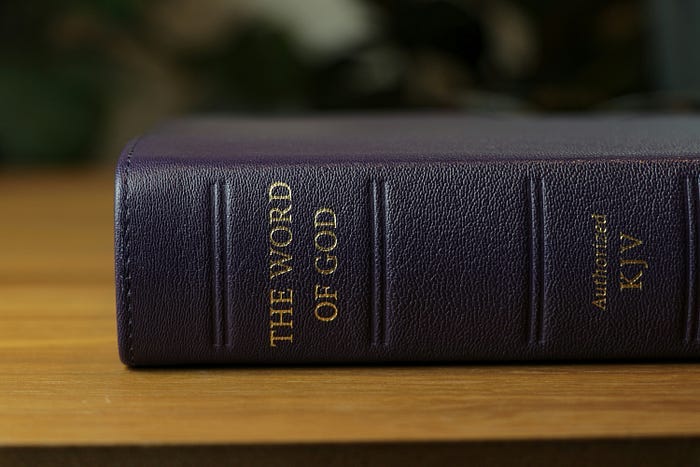
Within the complex and highly stratified landscape of contemporary American fundamentalism, there exists a unique, highly localized, and deeply entrenched epistemological phenomenon: the belief that the English translation of the Bible, specifically the Authorized King James Version (KJV) of 1611, represents the ultimate, perfect, and supreme revelation of God. While popular culture frequently relies on the comedic trope of the uneducated literalist who genuinely believes that the ancient Israelites, Jesus of Nazareth, and the Apostles spoke Early Modern English, this hyperbolic critique maps onto a very real, identifiable, and documented theological faction. This faction does not necessarily claim that the historical figures of the ancient Near East spoke English in their daily lives; rather, they assert a far more radical theological premise. They claim that the 1611 English translation transcends the original Hebrew, Biblical Aramaic, and Koine Greek manuscripts, operating as an “advanced revelation” that corrects, supersedes, and perfects the ancient languages.
To comprehend who precisely holds this belief, the theological architecture that justifies it, and the sociolinguistic mechanisms that enable such a paradigm to flourish, it is necessary to examine the far-right edge of the “King James Only” (KJVO) movement. This report provides an exhaustive theological, historical, and sociological analysis of this specific faction. It traces the origins of the “Advanced Revelation” doctrine, primarily attributed to the late Peter Ruckman, his ideological successors, and modern digital proliferators. It examines the theological frameworks engineered to rationalize this belief, specifically the doctrines of “Double Inspiration,” the rejection of traditional textual criticism, and the elevation of the Byzantine manuscript tradition.
Furthermore, the analysis investigates the sociological infrastructure that sustains this worldview. A belief system that functionally replaces ancient history with seventeenth-century English requires a robust mechanism of epistemological closure. This report explores how denominational isolation, specialized fundamentalist educational curricula, and the broader context of biblical illiteracy within the American religious landscape work in tandem to create an environment where linguistic revisionism is not only possible but mandated. By analyzing these intersecting historical, textual, and sociological factors, this report answers the fundamental inquiry of how a seventeenth-century English translation commissioned by a British monarch came to be viewed by a dedicated and vocal minority as the eternal, unalterable, and original language of divine truth.
