

Caitlyn Jenner, the Trump Passport Policy, and the Politics of Trans Recognition
When the Marker Fails the Person

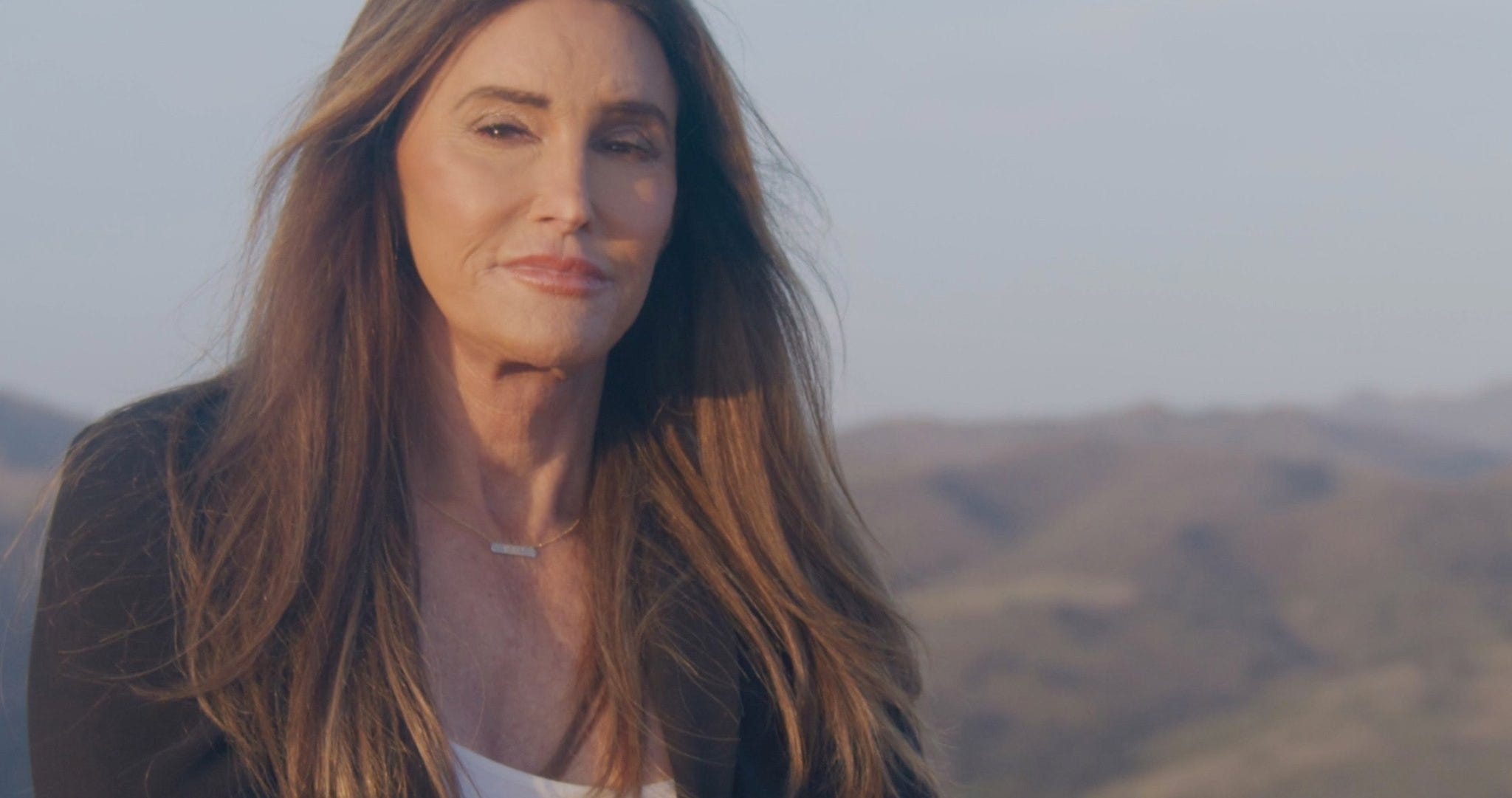
I want to start with the moment itself, since that is where this story sits.
Caitlyn Jenner is across from Tomi Lahren on a Fox Nation podcast. The interview was filmed earlier this month. At some point, Lahren asks how the Trump administration’s passport policy is hitting her. Jenner answers, plainly, that she cannot use her passport. It has an M on it. Officials look at her, see a person who reads as female, look at the document, see something different, and pull her aside (McFall, 2026).
Then she says she has tried to reach Trump. She drove to Mar-a-Lago in February. She left a letter with the Secret Service. He has not responded (Mediaite Staff, 2026).
Let that sit for a beat.
I am writing this as a trans woman who has spent the past year watching this exact policy move through executive orders, lower courts, and the Supreme Court’s shadow docket. I have read the filings. I have read Justice Jackson’s dissent. I have read the 2022 U.S. Trans Survey on what happens to trans people whose IDs do not match how they live. I am writing this, too, as someone who watched Caitlyn Jenner spend several years lending her name, her face, and her PAC money to candidates running on the same agenda now closing on her.
Both of those things are true at once. That is what makes this moment worth slowing down for.
What the policy says, in plain English
On January 20, 2025, his first day back, Trump signed Executive Order 14168. The order’s title runs long: Defending Women From Gender Ideology Extremism and Restoring Biological Truth to the Federal Government. The mechanism is simple. It tells the federal government that sex is binary, that it is fixed at conception, and that all federal documents (passports included) must reflect a person’s “sex” rather than their gender identity (Trump, 2025).
Within months, the State Department had stopped issuing passports with X markers and stopped allowing trans applicants to update the M or F field to match how they live (Williams Institute, 2025).
A class of plaintiffs sued. The case is Orr v. Trump. A federal district judge in Massachusetts found the policy likely violated equal protection and entered a nationwide preliminary injunction stopping enforcement (Civil Rights Litigation Clearinghouse, 2025).
The First Circuit largely declined to pause that injunction. The Trump administration went to the Supreme Court on the emergency docket.
On November 6, 2025, the Court granted a stay by a vote of 6 to 3. Justice Ketanji Brown Jackson wrote a sharp dissent joined by Justices Sonia Sotomayor and Elena Kagan, calling the move a fast-track suspension of trans people’s identification rights without full review (de Vogue, 2025; Howe, 2025).
So when Jenner sat down with Lahren and said her passport had an M on it, she was not describing a glitch. She was describing the policy, doing what the policy was built to do.
Why she’s surprised, and why she shouldn’t be
Jenner is not a marginal Trump supporter. She endorsed him. She launched a federal PAC, Fairness First, that funded candidates running on the bills now in question (McCaughey, 2023). She ran for governor of California in 2021 on a Republican ticket (Reston, 2021). She has spent significant airtime on Fox arguing that trans women should be barred from women’s sports.
In other words, she did not stumble into this coalition. She helped build the wing of it that won.
What she seems to have believed, and what plenty of conservative trans women have told themselves out loud, is that the rules being passed were rules for someone else. For trans kids. For trans athletes. For the headline cases. Not for her, an Olympic gold medalist with a Vanity Fair cover and a Mar-a-Lago membership (Britannica Editors, 2025).
The text of EO 14168 does not draw that line. The policy applies to anyone whose listed sex at the State Department does not match the M or F the federal government has assigned them. Wealth does not exempt you. Fame does not exempt you. A friendship with the president, it turns out, does not exempt you either.
The internet had a name for this within hours. Reporters covering the Lahren interview kept reaching for the meme: leopards ate her face (Reilly, 2026). Ana Navarro on The View said, on air, “cry me a river” (Mediaite Staff, 2026).
I get the impulse. I am not going to pretend I do not get the impulse. But I want to argue against where it lands.
What an “M” actually does
The reason this story matters past the spectacle has nothing to do with whether Caitlyn Jenner gets her passport fixed.
The reason it matters is that there are roughly 1.6 million trans adults and adolescents living in the United States, and a significant share of them carry IDs that do not look like them. The 2022 U.S. Trans Survey, with 84,170 adult respondents, found that 22 percent of people who held at least one ID with a name or gender that did not match how they lived reported being verbally harassed, denied services, asked to leave, or assaulted when they showed it (Advocates for Trans Equality, 2024).
That is not a hypothetical. That is one out of every five times the document came out of the wallet.
A passport is not a vibe. A passport is what gets you onto a plane, what gets you through customs, and what gets you a hotel room in a city where you do not speak the language. For a trans person, an ID that contradicts your face is an invitation for a TSA officer, a hotel clerk, a border guard, or a stranger in line behind you to ask questions you should not have to answer.
Pause to think about where in the world this matters most. Singapore. Saudi Arabia. Hungary. Russia. Uganda. Countries where being read as trans is, by itself, a security event. WorldPride 2025 organizers in Washington, D.C., flagged the issue in advance. Several international advocacy groups warned trans travelers to think hard about whether to come to the U.S. at all (Star Observer, 2025).
When Jenner says she cannot use her passport, she is naming, in a small and famous way, a problem the rest of us were already naming. The difference is that the rest of us did not vote for it.
